
Home / Blog / Wedding Invitation Wording and Design Ideas for India
Design & BrandingWedding Invitation Wording and Design Ideas for India
Clear wording and a calm design make an invitation easy to read and easy to answer. Here is how to structure the text, choose a tone and plan the format.
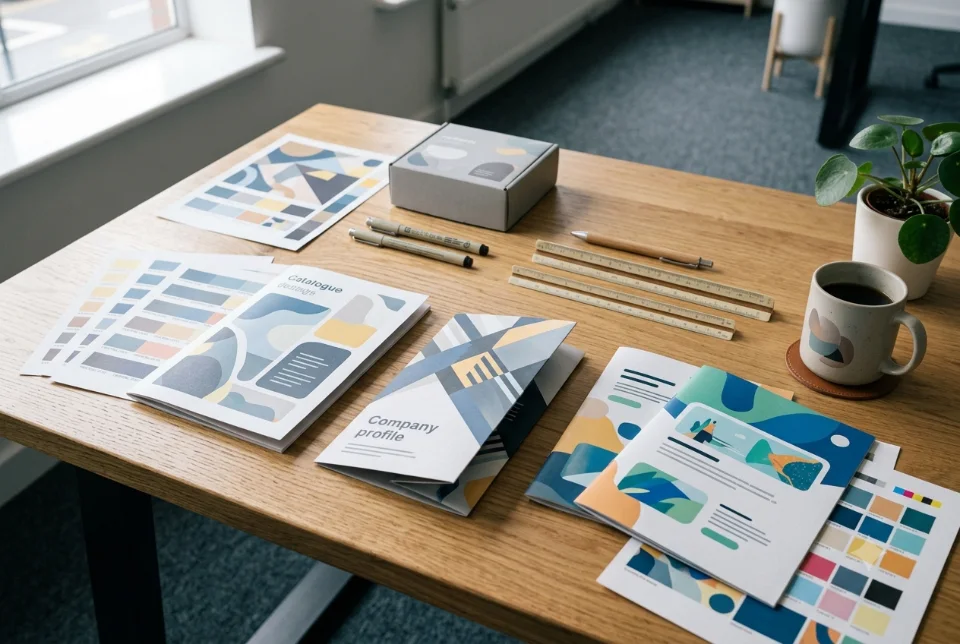
Good wedding invitation wording answers the guest's questions before they ask: who is inviting, who is getting married, what is happening, when, where, and how to reply. The tone and the design then decide how it feels. This guide explains the structure of an invitation, three tone options, fresh sample wording patterns you can adapt, bilingual tips, design ideas, print versus digital choices and a sending timeline. Religious or community lines should always come from your family or elders.
The parts of a wedding invitation
Whatever the style, almost every invitation is built from the same few blocks. Knowing them makes it easier to draft the text before any designer gets involved, and it keeps the card from becoming crowded.
- Opening line. A blessing, verse or traditional greeting, if your family and community use one. It is optional and entirely your choice.
- Hosts. The parents or family inviting guests, or the couple themselves.
- Couple names. Usually the most prominent text on the card.
- Event details. Date, day, time and the name of the function.
- Venue. Hall or home name with a full address, and a map or QR code if helpful.
- RSVP. A name and phone number, or a WhatsApp number, for replies.
- Extras. Dress code, parking or stay notes, and a line about gifts, only where needed.
A simple order that reads well
When guests scan a card, they read from top to bottom, so order matters. A dependable sequence is shown below. You can change it to match your tradition, but keep the most important facts easy to find.
- Opening line or blessing, small and centred.
- The hosts' invitation line.
- The couple's names, largest on the page.
- The function name, date and time.
- The venue and address.
- RSVP contact and any short note.
- Family names or invitees' list at the bottom, if your custom includes it.
If the card carries many functions, move the full schedule to an insert and keep the main card for the wedding itself. A card that tries to show a mehendi, sangeet, wedding and reception together often ends up in tiny print. Our wedding invitation card design service builds these inserts as a matching set.
Keep each block short. The best wedding invitation wording rarely runs past a few lines per block, because the design needs room to breathe, and guests read invitations quickly, often on a phone.
Choosing a tone: traditional, modern or short
Tone is the personality of the words. Pick one and stay with it throughout the card, so that the opening, the body and the closing sound like the same voice. Your wedding invitation wording should sound like your family, not like a template you have never spoken aloud.
- Traditional. Formal and respectful, with the parents as hosts, full names with titles, and a blessing at the top. It suits large family weddings and elders as the main readers.
- Modern. Warmer and more personal, often with the couple inviting in their own voice, and a lighter line such as joining them to celebrate. It suits friends-heavy guest lists.
- Short and minimal. Names, date, time, venue and a reply contact, with almost no extra phrasing. It suits small gatherings, engagements and digital-first invites.
If both generations are reading, mix gently: a traditional opening, followed by clear, plain details. Avoid long, difficult sentences. Guests should never have to decode when the function starts.
Want this done for you? Ragnar Studios handles Wedding Invitation Design. See how it works or get a free quote.
Sample wedding invitation wording patterns you can adapt
These patterns are written as fill-in templates, with brackets for your details. They are starting points, not religious or legal text. Replace them with your family's customary wording where that is expected.
- Traditional pattern: With joy and blessings, [Host names] request the pleasure of your company at the wedding of their [daughter / son] [Name] with [Name], on [day, date] at [time], at [venue, city]. Your presence will make the occasion complete.
- Couple as hosts: [Name] and [Name] are getting married, and we would love for you to be there. Join us on [date] at [venue, city] from [time] for the ceremony, followed by lunch.
- Short pattern: [Name] weds [Name]. [Date], [time]. [Venue, city]. Reply to [name, number].
- Function line: Mehendi on [date] from [time] at [venue]. Please come in bright colours.
- Closing line: With love, [Family name]. Kindly let us know by [date] if you can join us.
Read each version aloud. If you stumble over a line, guests will too. Also check that names and relationships are written the way the family prefers, since this is the most sensitive part of the card.
For other functions, the same patterns shrink easily. A housewarming card needs the host family, the occasion, the date, the muhurat or start time and the address. A birthday or baby shower card can be lighter still. Whichever occasion you write for, keep the wedding invitation wording principle: say what, when, where and how to reply, then stop.
Bilingual wedding invitation wording tips
Many Indian invitations use two languages, such as English with Hindi, or English with Marathi, Gujarati, Tamil, Punjabi or Bengali. A few habits keep this clean.
- Write the final text for each language separately, rather than translating word for word. Natural phrasing differs between languages.
- Keep dates, times and phone numbers in the same format in both languages so nothing conflicts.
- Choose the main language for the largest text, and place the second language in a smaller size or on the inside page.
- Ask a fluent family member to proofread the regional script. Spelling mistakes in names are noticed immediately.
- Give your designer typed text, not a photo of handwriting. Different scripts need suitable fonts and spacing.
Event details, RSVP and dress code in your wedding invitation wording
These are the lines that prevent confusion on the day. Write the day along with the date, for example Saturday, 14 February, so guests do not misread it. Give the start time and, if useful, the time when the main ritual or meal begins. Many families state a muhurat time separately.
For RSVP, name one person and give one number, preferably a WhatsApp-enabled one. Add a reply-by date. If you do not need replies, a line such as your blessings and presence are enough works too. A dress code line should be kind and clear, such as traditional wear or colours for a sangeet. Add parking or accommodation notes only if guests will genuinely need them.
Venue, map and QR code
Write the venue name, the area and the city, followed by a landmark if the hall is hard to find. For guests from out of town, a QR code that opens the location on a maps app is practical, as long as it is large enough to scan and tested on a phone before printing. On a digital invite, a tappable link does the same job.
Design ideas: minimal, floral and traditional motifs
Wording and design work as a pair. A long traditional text needs a calm layout, while a short text can carry a bolder design. Before choosing a style, finish your wedding invitation wording, because a designer can then set the right font size and spacing for the actual text instead of placeholder lines.
- Minimal. Plenty of white space, one or two colours, a refined font for the names and small, clear details. It photographs and shares well on WhatsApp.
- Floral. Soft illustrated flowers around the edges or behind the names. Keep text on a clean area so it stays readable.
- Traditional motifs. Borders, arches, paisley, mandala or regional patterns, often with gold-toned accents. Use them as framing, not behind the text.
- Illustrated. A custom drawing of the venue, the couple or a favourite landmark. It is memorable, though it takes more design time.
- Typography-led. Careful lettering and spacing do the work, with very little decoration.
Colours should match the wedding theme but still give strong contrast for text. A light gold on cream may look rich in a mockup yet be hard to read when printed. Our graphic design services cover this kind of layout work, and a clear brief helps, as explained in how to brief a graphic designer.
One more point on fonts: script-style fonts look pretty for names but are hard to read for dates and addresses. Use a decorative font for the couple's names and a plain, clear font for the details. This matters more in regional scripts, where fine strokes can disappear at small sizes or on textured paper.
Print versus digital: what to consider
Most families send both, and each has a role.
- Printed cards. Best for elders and close relatives, and they become keepsakes. Cost depends on paper, size, finish and quantity. Order a sample, and check names before the full print.
- WhatsApp image or PDF. Fast, free to send and easy to forward. Keep the file light so it opens on any phone, and use text large enough for small screens.
- Short video invite. Good for sharing the mood, but guests still need a clear text version of the details.
- Save-the-date. A short early message with only the date and city, helpful for guests travelling or booking leave.
If you print, ask your designer for files with bleed and the right colour setup. Our guide on print file preparation explains these terms simply.
When to send: a practical timeline
Timelines vary by family and city, so treat these as a rough guide. Send a save-the-date a few months ahead when many guests travel. Finalise wording and proof the design well before printing, since families often take time to agree. Printed cards usually go out a few weeks before the event, with personal delivery for elders. Digital invites can follow soon after, and a short reminder a few days before the function helps with the final count. Start earlier if the wedding falls in peak season, when printers are busy.
A final checklist for your wedding invitation wording
Before the text goes to the designer and again before print, run through these checks. A second reader catches mistakes the writer no longer sees.
- Names, spellings and titles confirmed by the family.
- Date, day, time and venue checked by two people.
- Phone numbers tested and the RSVP date included.
- Regional-script text proofread by a fluent reader.
- QR code scanned on a real phone.
- Text readable at WhatsApp size and in print.
- Print sample approved before the full order.
If you would like help turning your wording into a finished card, share your requirements and we will prepare a custom quote for your wedding invitation design.
Frequently asked questions
What should wedding invitation wording include?
Include the hosts, the couple's names, the function with date, day and time, the venue with address, and an RSVP contact. Add a dress code or parking note only if useful. A blessing or opening line is optional and depends on your family's tradition.
Who should be named as the host?
Traditionally the parents or family invite the guests, but many couples now invite in their own names, or together with their parents. Choose what feels right for your families and keep it consistent across the printed card and the digital invite.
Can I write the invitation in two languages?
Yes. Write each language's text properly instead of translating word for word, keep dates and numbers in the same format, and have a fluent reader proofread the regional script. Use the main language for the largest text and the second language in a smaller size.
How early should wedding invitations be sent?
It varies, so treat it as a rough guide. Send a save-the-date a few months ahead if guests travel, and printed cards a few weeks before the event. Digital invites can follow, with a short reminder close to the date for an accurate count.
Is a WhatsApp invitation enough?
Many families use WhatsApp for friends and relatives, and a printed card for elders and close family. The choice is yours. If you send a digital invite, keep the file light and the text large enough to read on a small phone screen.
How do I word an RSVP line politely in wedding invitation wording?
Keep it short and warm, such as asking guests to let you know by a date, with one name and one phone number. If you do not need replies, a line saying your presence is the blessing works. Avoid listing several different contacts.
What design styles suit a wedding card?
Minimal layouts with white space, floral illustrations, traditional motifs such as borders and patterns, and illustrated or typography-led designs all work. Choose a style that keeps the text readable and matches the wedding theme, then test it at print and phone sizes.
Can you design the invitation from my wording?
Yes. You provide the final text, including any religious or community lines, and Ragnar Studios designs the layout for print and digital use. Pricing is a custom quote based on formats, languages, pages and revisions, shared after we understand your requirements.
Have your wording ready and want it designed for print and WhatsApp? Share your requirements for a custom quote: see our wedding invitation card design service.
Free quote
Tell us about your invitation
Fill this short form and send it on WhatsApp. We reply with questions or a quote. Nothing is charged on the website.
- Takes about two minutes
- Goes straight to Ragnar Studios on WhatsApp
- Prefer email? Write to info@ragnarstudio.com
Ready to start Wedding Invitation Wording and Design Ideas for India?
Tell us what you need. We reply on WhatsApp with questions, next steps and a quote.