
Home / Blog / How to Make a Wedding Photo Book, Step by Step
Wedding & FamilyHow to Make a Wedding Photo Book, Step by Step
Your photographer's 800 photos are not a story yet. Here is how to make a wedding photo book from them: a short, readable book you will actually pick up and show people.
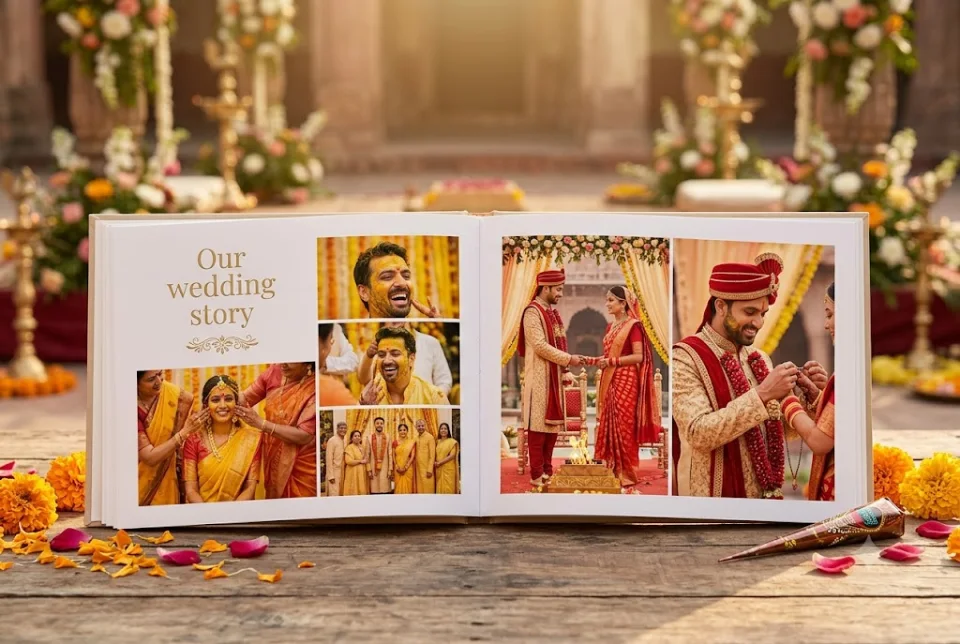
Quick answer: here is how to make a wedding photo book. Collect the final edited photos from your photographer and family, shortlist 40 to 70 favourites, group them by ceremony (haldi, mehendi, sangeet, phere, reception), put them in the order the days happened, trim the shortlist to fit your page count, add a short caption to each spread, and send everything to a printer. A good book is shorter and more personal than the big wedding album, and the sorting is a weekend of focused work.
Most Indian weddings stretch over three to five days and produce hundreds of photos. The official album usually shows only the formal moments. The steps below show you how to make a wedding photo book as a second book, the one that carries the jokes, the cousins, the nervous giggles and the messages guests left for you.
Wedding album vs wedding photo book: what is the difference?
A traditional wedding album is made by your photographer, often in a heavy box with thick pages, and it follows a set formula of portraits and rituals. A wedding photo book is lighter. It is a smaller printed book, usually 12 to 20 pages, that you design around the moments you want to remember, including candid shots from relatives' phones.
You do not have to choose one. Many couples keep the big album for the shelf and make a compact book to carry to their parents' house, gift to grandparents, or open on the first anniversary. If you are comparing formats, our guide on photo book vs photo album vs scrapbook explains where each one fits.
How to make a wedding photo book, Step 1: Collect every photo in one place
Before you choose anything, gather the material. Decide on a single folder on your laptop or phone and put everything in it.
- Photographer's gallery. Ask for the edited, full-resolution files, not the small preview versions sent on WhatsApp. Many photographers share a Google Drive or pen drive link after the album design is finalised. Ask politely if they can include the unedited candids as well, since those often hold the best expressions.
- Videographer stills. A frame grab from your phere video can be a lovely page, but only if the video is high quality. Check sharpness before using it.
- Family and friends. Create a WhatsApp group or shared drive link and ask relatives to upload their pictures. Request originals sent as documents, because WhatsApp's normal photo sharing compresses the file and blurs it in print.
- Pre-wedding shoot. If you did one, keep a few frames for the opening page.
Give people a deadline of one or two weeks. Photos from aunts and cousins usually arrive late, and they are often the funniest ones.
Step 2: Shortlist 40 to 70 photos
This is the hardest part, and the place where most people stall. Work in rounds so it does not become overwhelming.
- Round one, quick cull. Remove duplicates, blinks, blurred shots and anything where someone is clearly caught mid-sentence. This alone often cuts the pile by half.
- Round two, one per moment. From each burst of similar shots, keep only the strongest. Choose faces over backs, and natural smiles over stiff poses.
- Round three, balance. Count what is left by ceremony. If you have 30 haldi photos and 4 from the reception, trim the haldi and go looking for more reception frames.
Whoever you are making the book for should shape the choices, so think about who will read it. Your in-laws might want to see the mandap, while your friends will love the sangeet dance floor. If you need a deeper method, how to choose photos for a memory book walks through the same culling process for any occasion.
Step 3: Plan each ceremony as a mini chapter
Indian weddings change from family to family, so adjust this list to yours. A Punjabi wedding may include a chooda and jaggo night, a Bengali one may have gaye holud and bou bhaat, and a south Indian wedding may centre on the muhurtham. Here is how to approach the common ones. These counts are for your shortlist; you will trim them again in Step 7 to fit the book.
- Haldi. Aim for 4 to 6 photos. Show the yellow chaos: the first smear on the cheek, siblings ganging up, the grandmother who stayed clean until the end. Close-ups of hands and faces work better than wide shots here.
- Mehendi. Pick 4 to 5 photos. One detail shot of the design, ideally with the groom's name hidden in it, then a few of the women laughing while their hands dry.
- Sangeet. This is usually the most energetic day, so give it 6 to 8 photos. Include at least one family performance, one couple dance, and one wide shot that shows the whole crowd.
- Baraat and arrival. A page or two for the horse or car, the band, and the groom's friends dancing outside the venue.
- Phere and vows. Keep 8 to 10 photos. Choose the varmala, the pheras, the sindoor or mangalsutra moment (or the equivalent ritual in your family), and the blessings from elders. This is the emotional centre, so let these photos breathe with white space.
- Vidaai. One or two photos of the farewell are enough for a tender page. Do not crowd it.
- Reception. 5 to 6 photos: the stage entry, the cake or first dance if you had one, and guests lined up for photographs.
Step 4: Put the photos in story order
Sequencing is where how to make a wedding photo book starts to feel like storytelling.
Chronological order is the easiest and the most natural. Everyone knows how a wedding unfolds, so following the days gives the book a rhythm. Use this skeleton as a starting point, and swap haldi and mehendi if your family held them the other way round.
- Opening page. A single strong portrait, the invitation card, or the pre-wedding photo, with your names and the wedding date.
- Getting ready. Outfits, jewellery, the sehra, a mother tying a bracelet. These small shots add charm.
- The pre-wedding functions. Mehendi, haldi, sangeet, in the order they happened.
- The wedding day. Baraat, varmala, phere, vidaai.
- The reception and the after-party. The relaxed, laughing photos.
- Closing page. The quiet end of the night, or a family group photo.
Step 5: Write captions that sound like you
Words are the part of how to make a wedding photo book that most people skip, and the part they later value most.
Photos show what happened, and captions explain why it mattered. A short line on most spreads makes the book personal, and it helps future readers, such as your children, who were not there.
- Name people. "Nani, who flew in from Jaipur just for this" tells more than "family photo".
- Add the small detail. "The moment Papa stopped being brave" beats "vidaai".
- Mention funny incidents: the power cut during the sangeet, the missing shoes, the cousin who cried more than the bride.
- Keep each caption to one or two lines. If you are stuck, borrow structures from our list of photo book caption ideas and rewrite them in your own words.
Write in English, Hindi, or Hinglish, whatever your family speaks at home. A line in your mother tongue often lands better than a polished English quote.
Step 6: Add messages from guests and family
One page of handwritten or typed messages can turn a nice book into a keepsake. You can collect them before or after the wedding.
- Place a small card on each table at the reception, asking guests for a one-line wish. Photograph the cards later, or have someone collect them.
- Ask close friends and siblings on WhatsApp for a two or three line message about you as a couple. Do this a few days after the wedding while the memories are fresh.
- Ask your parents and grandparents for a blessing, even if it is only a sentence. Many people treasure these lines more than the photos.
Choose the best 6 to 10 messages and place them on one or two pages near the end. Check spelling and names before printing, since errors on a message page feel awkward in a keepsake.
Step 7: Choose the right size and number of pages
The last decision in how to make a wedding photo book is how big it should be.
A page count and a photo count go together. A simple rule is two to four photos per spread, with a spread or two kept for a full-page favourite. This is a rough guide for your final selection.
- 12 pages: about 15 to 25 photos. Good for a single event like the reception, or a short story of the main wedding day.
- 16 pages: about 25 to 35 photos. Works for a full wedding with a few photos from each ceremony.
- 20 pages: about 30 to 45 photos. Best for multi-day weddings where you want to touch every function.
At Ragnar Studios, printed photo books come in 12 to 20 pages, starting at ₹1,199 for 12 pages and going to ₹1,999 for 20 pages. If your wedding had more functions than 20 pages can hold, consider making two books, one for the pre-wedding days and one for the wedding and reception. Compact books are also easy to post to relatives abroad.
Design tips that make your wedding book look finished
- Use one full-page photo as an anchor. The varmala or the phere moment usually earns it.
- Group photos with a shared colour. Haldi yellow, mehendi green and reception gold look good when they sit together.
- Avoid tiny photos. Anything smaller than a postcard loses faces in print.
- Leave white space. It gives the eye a rest between busy pages.
- Check resolution. Photos should be sharp on a phone when zoomed in. If they look soft there, they will look soft in print.
For more layout ideas, see our notes on photo book layout and design tips.
How to make a wedding photo book with Ragnar Studios
You do not need design software. The usual flow is simple: you send your selected photos and captions on WhatsApp, the studio lays out the pages, and you receive a preview to check before anything is printed. Request changes after the preview, then approve the print. The finished book is delivered across India. There is no payment on the website, so you settle the details directly with the studio over WhatsApp.
Before you send files, label them by ceremony (for example, "01-haldi-aunty-dancing") so the layout follows your order. You can read the full process in how to make a photo book online in India, or see the wedding photo book page for the format and price.
Common mistakes when you make a wedding photo book
- Starting too late. Photos are easier to sort in the first month or two, when you still remember who is who.
- Using compressed WhatsApp images. They print poorly. Ask for the original files.
- Choosing only formal poses. The candid shots are what make people smile years later.
Once it is done, a second copy makes a thoughtful gift, since parents, grandparents and in-laws often cherish a printed book more than a link in a family group. If you are shopping for someone else's wedding instead, see these wedding gift ideas for couples in India.
Frequently asked questions
How to make a wedding photo book from my photographer's photos?
Ask your photographer for the edited, full-resolution files, then shortlist 40 to 70 of the best. Group them by ceremony, arrange them in the order the days happened, trim to fit your page count and add short captions. Send the photos and captions to your studio, check the preview, and approve the final print.
How many photos should a wedding photo book have?
For a 12 to 20 page book, the final selection is roughly 15 to 45 photos, depending on the page count and how many functions you cover. Shortlist 40 to 70 first, then trim. Two to four photos per spread reads comfortably, and a few full-page favourites stop the book from feeling crowded.
What is the best order for a wedding photo book?
Chronological order works best: getting ready, haldi, mehendi, sangeet, baraat, phere, vidaai and reception. This follows the way the wedding happened, so readers never feel lost. If your functions took place in a different sequence, follow your own timeline instead of the standard one.
Can I include haldi, mehendi and sangeet photos in the same book?
Yes. Give each function its own small chapter of 2 to 6 photos, with a caption or two. If you want to cover every function in detail, choose the 20 page option, or make one book for the pre-wedding days and another for the wedding and reception.
How do I add guest messages when I make a wedding photo book?
Collect short messages from guests on reception cards, or ask close friends and family on WhatsApp after the wedding. Choose the best 6 to 10 and place them on one or two pages near the end. Type them out neatly or photograph handwritten notes, and proofread every name before printing.
What size is best for a wedding photo book?
A compact book of 12 to 20 pages is easy to hold, post to relatives and display. For one event, 12 pages is enough. For a full multi-day wedding, 18 to 20 pages gives each ceremony some room. Choose the size that keeps your photos large enough to see faces clearly.
How much does a wedding photo book cost in India?
At Ragnar Studios, printed photo books start at ₹1,199 for 12 pages and go to ₹1,999 for 20 pages. Prices elsewhere vary by size, paper and binding, so compare what is included. A compact photo book usually costs less than a full professional wedding album.
Can I make a wedding photo book through WhatsApp?
Yes. At Ragnar Studios you send your selected photos and captions on WhatsApp, the studio designs the pages, and you get a preview to review before printing. Send original files as documents rather than normal photos, so the print stays sharp.
A wedding is over in a few days, but the book stays on the shelf for decades. When your photos and captions are ready, see our wedding photo book page to start a personalised book from ₹1,199.
Start your book
Tell us your story.
Build your enquiry here, then send it in WhatsApp. We’ll discuss the design, final price and delivery before you order.
- Choose a page count and occasion
- Add as much or as little story as you like
- Send photos in the same WhatsApp chat
- 1Book
- 2For
- 3Story
- 4Photos
- 5You
- 6Review
To create a book, contact us on WhatsApp or email info@ragnarstudio.com. The step-by-step form needs JavaScript.
Almost there
Your enquiry is ready to send.
Open WhatsApp, review the message and press Send. Share your selected photos in the same chat.
What is a good birthday wish for husband?
Happy birthday to the man who makes every ordinary day feel like home. Add a personal detail to make it your own.
What should I write in my husband’s birthday card?
Mention a specific memory, thank him for something real and wish him a happy year ahead.
How can I make a birthday wish funny?
Use affectionate teasing about shared habits, and keep the humour warm rather than harsh.
What is a short birthday wish for husband?
Happy birthday, my love. You are my home.
Can I post a birthday message for my husband on social media?
Yes. Pair a photograph with a short caption, and keep private details for a card or a personal note.
What gift goes well with a birthday message?
A personalised photo book, a watch or a wallet engraved with a message are popular options.
How early should I plan a birthday gift?
Plan at least two weeks ahead for personalised gifts to allow time for design and delivery.
Should I write the message by hand?
A handwritten message feels more personal, and you can also photograph it for a printed book.
Keep reading.
More ideas and guides from Ragnar Studios.
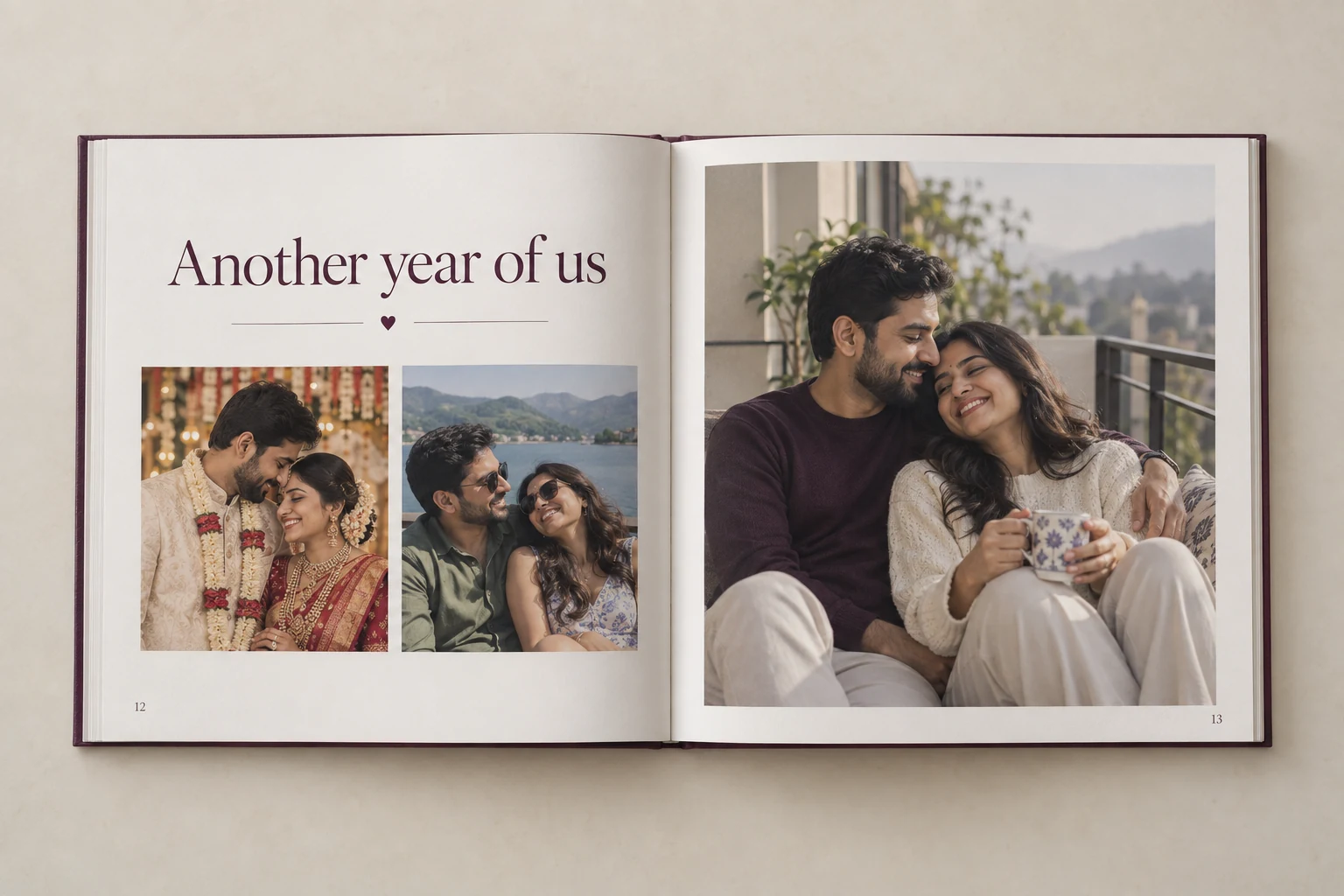 Gift Ideas · 8 min readAnniversary Gift Ideas by Year: 1st to 50th (With Personal Twists)From paper on the first anniversary to gold on the fiftieth, here are traditional anniversary themes, and ways to make each gift personal.Read the article →
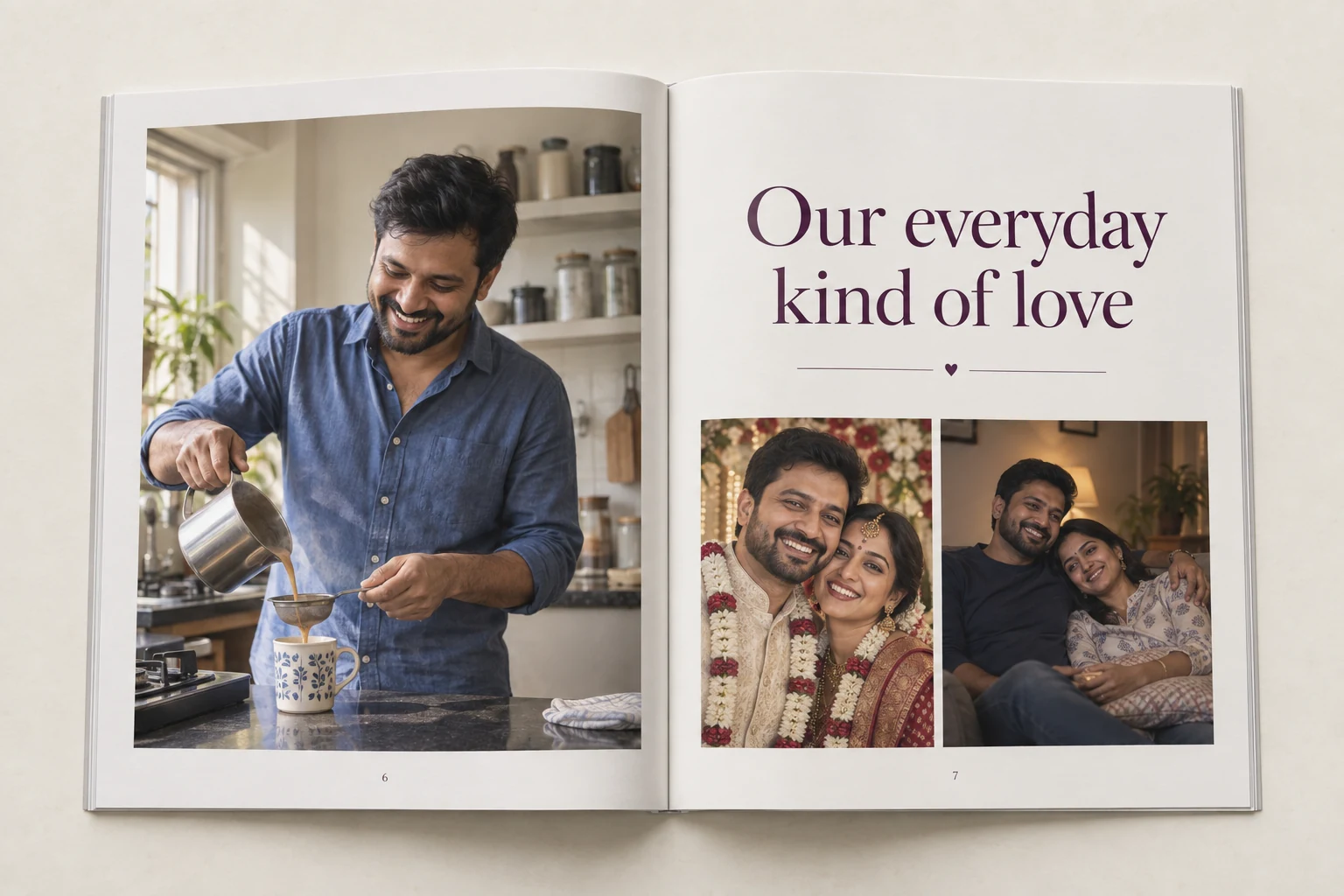 Gift Ideas · 7 min read25 Birthday Gift Ideas for Husband That Feel PersonalSkip the usual shirt and perfume. Here are 25 birthday gift ideas for your husband, sorted by personality, budget and how much planning they need.Read the article →
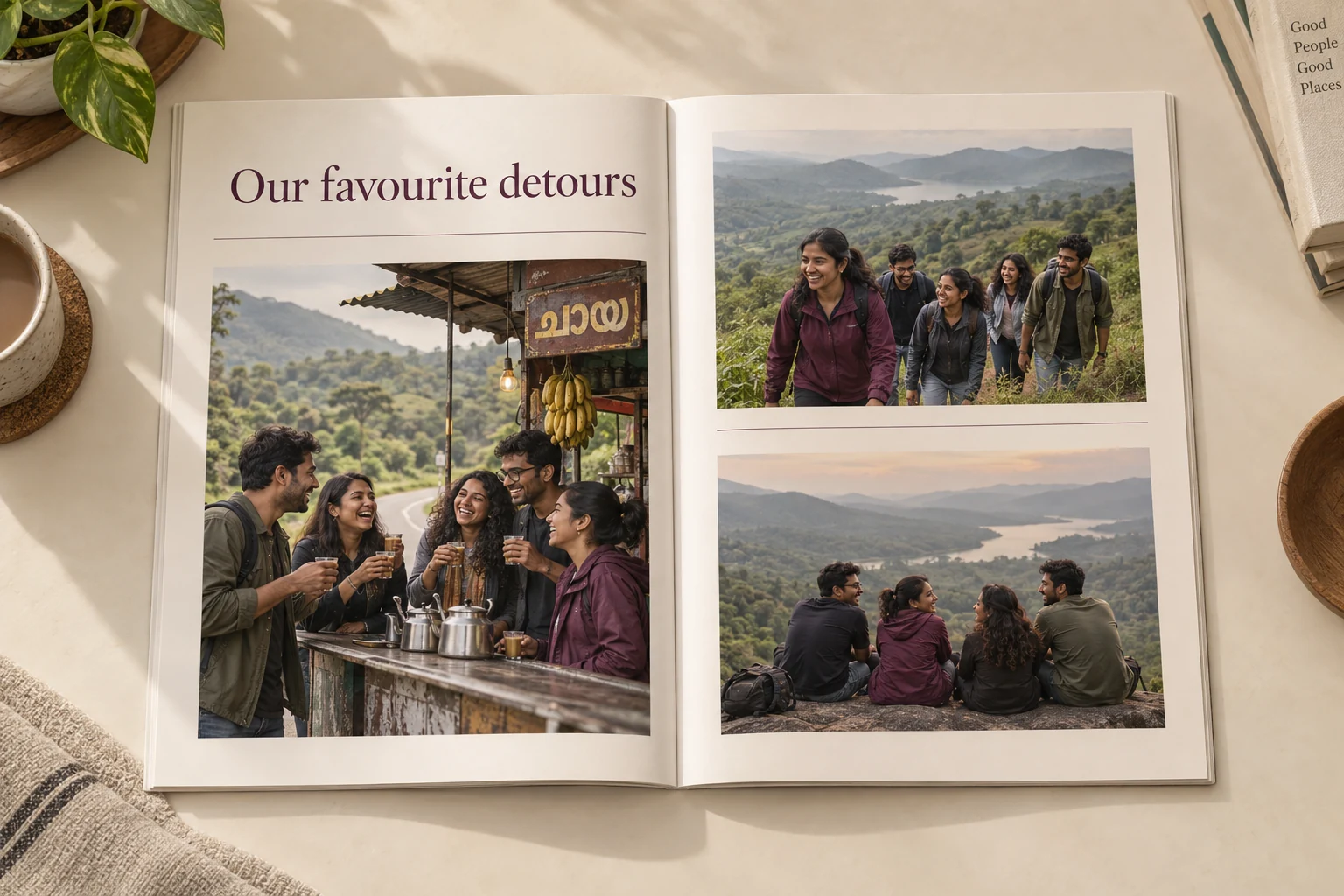 Photo Book Tips · 6 min read50 Photo Book Caption Ideas: Funny, Romantic and FamilyA good caption turns a photograph into a story. Here are 50 caption ideas for photo books, plus a simple formula for writing your own.Read the article →
 Custom photo booksCustom Photo Book OnlineDesigned for you, professionally printed and ordered on WhatsApp.Explore the guide →Anniversary giftsAnniversary Photo BookTurn the years you have shared into a printed anniversary keepsake.Explore the guide →
 Birthday giftsBirthday Memory BookA personalized birthday photo book with messages from their favourite people.Explore the guide →
Turn your photos into a book worth keeping.
Share your photographs and a few lines. The studio will design the pages, you approve them, and it is professionally printed. Books start at ₹1,199.