
Home / IT & Design Blog / Logo Design Tips for Small Business Owners in India
Design & BrandingLogo Design Tips for Small Business Owners in India
A logo is small, but it appears on your signboard, bills, WhatsApp profile and packaging. These logo design tips will help you get one that is clear, flexible and built to last.
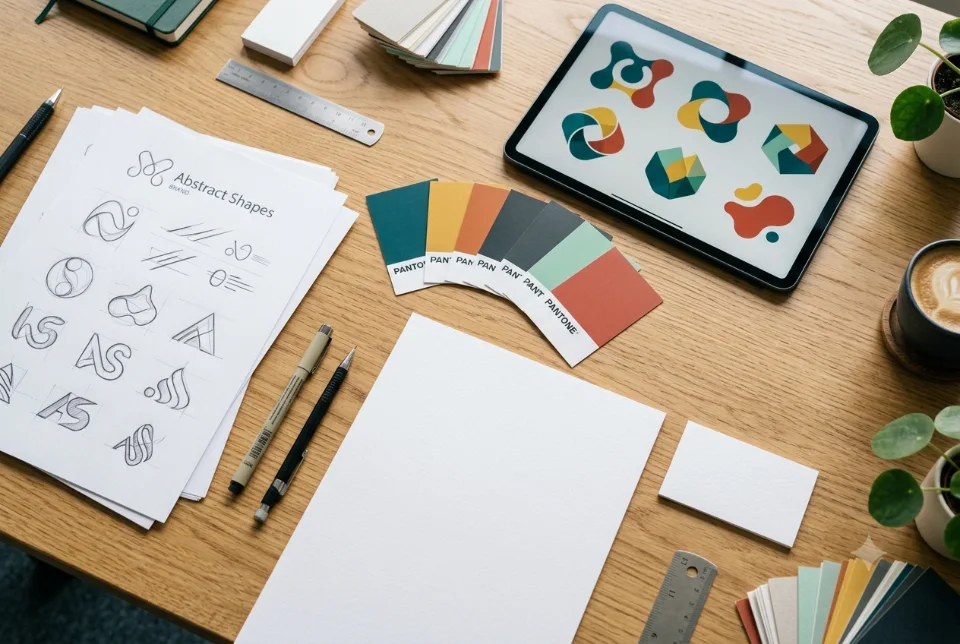
The most useful logo design tips for a small business come down to a few ideas: keep it simple, make sure it works in one colour and at tiny sizes, choose colours and fonts that suit your customers, and get proper files for every use. A good logo does not need to explain your whole business. It needs to be easy to recognise and easy to use everywhere. Below are practical logo design tips written for Indian small business owners, from planning to file formats to mistakes worth avoiding.
Why your logo matters more than you think
Your logo is often the first thing a customer sees: on a Google Business Profile, an Instagram page, a visiting card, a delivery bag or a shop board. It will be printed on large flex banners and shrunk into a round WhatsApp profile picture the size of a thumbnail. One mark has to survive all of that.
A logo does not create trust by itself, and it will not guarantee sales. But a clean, consistent one signals care, while a messy or copied one can make a good business look careless. Treat it as a long-term asset rather than a quick task. Changing it every year confuses customers and wastes the recognition you have built.
The logo design tips in this article apply whether you hire a designer, use an in-house person or brief a studio. They help you judge the work and give better feedback.
Core logo design tips to follow
If you remember only a handful of logo design tips, make it these. Use them as a checklist when you review any design.
- Keep it simple. Fewer shapes, fewer colours and fewer effects make a logo easier to remember and easier to reproduce.
- Make it work in one colour. Test a black-only and a white-only version. Single-colour printing is cheaper and is common on stamps, bills and packaging.
- Test it small. Shrink it to the size of a profile picture and a pen print. If the details vanish, simplify.
- Fit your business and audience. A bakery, a law firm and a gym should not feel the same.
- Be distinct. Look at competitors nearby and avoid looking like them.
- Avoid trends that date quickly. Heavy gradients, glossy effects and fashionable fonts can look old within a few years.
- Plan for variations. You will want a horizontal version, a stacked version and an icon-only version.
- Get the right files. A logo you cannot use in print or online is not finished.
Simplicity and memorability
Many owners try to fit everything into one logo: the product, the city, the founder and a slogan. The result is crowded and forgettable. One of the most reliable logo design tips is to choose one idea and express it clearly. That could be a monogram of your initials, a simple symbol tied to your work, or a wordmark where the shape of the letters is the design.
Ask a simple question: could someone draw this from memory after seeing it a couple of times? If not, it may be too detailed. Space around elements matters too. Breathing room often makes a logo look more confident than extra decoration does.
If you are tempted to add your tagline inside the logo, consider keeping it separate. A tagline can change over time, while the logo should stay stable.
Versatility: one logo, many places
List every place your logo will appear before design begins. For many Indian small businesses this includes a shop signboard or flex, visiting cards, invoices with GST details, a website header, a Google Business Profile photo, social media profile pictures, product labels, packaging and WhatsApp catalogue images.
These uses have different needs. A signboard is seen from far away, so bold shapes and strong contrast matter. A tiny profile circle needs a compact icon. A letterhead needs a horizontal layout. A well-designed logo comes with a few arrangements built for these situations.
Also check how it looks on both light and dark backgrounds. A logo that vanishes on a dark photo or a coloured packaging box will need a reversed version. Ask for this up front rather than discovering it after printing.
Choosing logo colours that suit your business
Colour carries mood, but meanings differ between people and cultures, so use general associations carefully rather than as rules. Blue often feels calm and trustworthy, green can suggest nature or health, red and orange feel energetic, and black or deep tones can feel premium. Use these as starting points, then think about your own customers and competitors.
- Limit your palette. One main colour and one or two supporting colours are enough for most small businesses.
- Check contrast. Text on a coloured background must stay readable, especially on small screens.
- Think about print. Some bright screen colours look duller on paper. Ask for colour codes for both screen and print.
- Look at your category. If every nearby competitor uses red, a different colour might help you stand out, if it still suits your product.
- Keep it consistent. Use the same colours on your website, social media and packaging.
These logo design tips on colour matter because a consistent palette becomes part of how people recognise you, even before they read your name.
Picking the right fonts
Typography is half of most small business logos. A clean font that is easy to read at small sizes usually beats a decorative one. Be careful with very thin, very ornate or very condensed fonts, because they can break down on a flex banner, a stamp or a small label.
If your customers read Hindi or another regional language, plan for that early. Decide whether you need a logo in both English and a local script, and make sure the second version is designed with the same care, not just typed in a default font. Some fonts do not support every script, so a matching design takes thought.
Licensing is another point owners overlook. Some fonts are free only for personal use. Ask your designer to confirm that the fonts used are properly licensed for commercial logo use, or that the lettering is custom drawn.
File formats you should receive
A logo is only useful if you can use it in many places. These are the files you should ask for, in plain terms:
- Vector files (AI, SVG, EPS or PDF). These scale to any size without blur, which is vital for flex banners, vehicle branding and large boards. Printers often ask for these.
- PNG with transparent background. For websites, presentations, social media and documents placed over colour.
- JPG. A flat image for quick sharing where transparency is not needed.
- Colour versions. Full colour, black, white and, if possible, an icon-only version.
- Colour and font details. Colour codes (HEX for screen, CMYK for print) and the names of the fonts used.
Keep a backup of all of these in cloud storage and on a pen drive. Many owners lose their logo when a freelancer's laptop crashes or an old email account disappears.
Logo mistakes to avoid
These are the problems that show up again and again, and the logo design tips above help you avoid most of them.
- Using a generic template. Online templates are often shared with many other businesses, so you may find the same design elsewhere. That makes it hard to stand out and can cause trouble if you want to protect your brand later.
- Too much detail. Fine lines, tiny text, shadows and many colours disappear when the logo is printed small.
- Copying a well-known logo. Even a close imitation can confuse customers and create legal risk.
- Relying on clip art or stock icons. These may be used by others and often have licence limits.
- Following a fashion. A style that is popular this year may look dated soon.
- Skipping file delivery. Receiving only a low-resolution JPG is a very common problem.
- Designing in isolation. Not checking the logo on a real signboard mockup, packaging or phone screen.
- Choosing by committee. Asking twenty friends usually produces a compromise nobody loves. Test with a few people from your actual customer group.
Working with a designer: how to get better results
The quality of your brief shapes the quality of the logo. Before you contact anyone, write down what your business does, who your customers are, three words describing your personality, logos you like and dislike (with reasons), and where the logo will be used.
- Share context, not just taste. Explain your customers and competitors, not only your favourite colours.
- Ask about the process. Find out how many concepts you will see, how many revisions are included and what happens after that.
- Clarify ownership. Confirm in writing that you receive the final files and the right to use the logo.
- Give clear feedback. Say what is not working and why, instead of only "make it better".
- Look at past work. Check whether their logos feel varied or all look the same.
Pricing varies widely in the market depending on the designer, the number of concepts and revisions, and whether you want a full brand kit. For a quote on your project, share your requirements and we will respond after understanding them. You can learn more about our logo design services and the broader logo design and branding services.
Beyond the logo: keep your brand consistent
A logo works best as part of a small system: colours, fonts, a style for photos and a consistent tone of voice. Without it, each new poster or social post looks different, and the logo loses its power.
You do not need a thick rulebook. A one or two page guide with the logo versions, colour codes, fonts and a few do and don't examples is enough for a small team or an outside printer. Our brand identity guide for small business explains how to build this step by step, and the brand identity design service covers it if you want help.
Once the design is final, use it everywhere the same way. Update your Google Business Profile, website, social media pages, invoices and packaging so customers see one consistent face of your business. If you plan a brochure or catalogue, our tips in brochure design tips for Indian businesses show how to carry the logo into print.
A quick final checklist before you approve
Before you say yes to a design, run through these final logo design tips as a last check:
- Does it look clear in black only and white only?
- Is it readable at the size of a WhatsApp profile picture?
- Does it look right on a dark background and on a signboard mockup?
- Is it different from nearby competitors?
- Are the fonts licensed and the colour codes provided?
- Have you received vector files, PNG, JPG and a transparent version?
- Do you have written confirmation of ownership?
If all the answers are yes, you have a logo you can use confidently for years. If you want help, message us on WhatsApp or email and we will talk through your requirements.
Frequently asked questions
What makes a good logo for a small business?
A good small business logo is simple, memorable and works in many places. It should look clear in one colour, stay readable when small, suit your customers and stand apart from nearby competitors. It also needs proper files so printers, websites and social platforms can all use it.
Which file formats should I ask for in a logo?
Ask for vector files such as AI, SVG, EPS or PDF for printing and scaling, a PNG with a transparent background for digital use, and a JPG for quick sharing. Also request colour, black and white versions, plus colour codes and font names so your brand stays consistent.
Which colours are best for a logo?
No colour is best for everyone. Choose one main colour and one or two supporting ones that suit your customers and category. Blue often feels trustworthy, green natural and red energetic, but meanings vary. Check contrast, and test how the colours look on screen and in print.
Is it okay to use a free online logo maker or template?
It is possible for a quick start, but templates can be shared with many other businesses, so your logo may not be unique. That makes it harder to stand out and to protect later. If you use one, check its licence and ask whether you get usable vector files.
How much does a logo design cost in India?
Prices vary widely depending on the designer, number of concepts, revisions and whether you also need a brand kit. Treat any figure you read online as a rough guide. For our work, pricing is a custom quote after we understand your requirements and the deliverables you need.
Should my logo include my business name?
Often yes, especially for a new business that customers do not yet know. A wordmark or a symbol with the name is easier to recognise. Many businesses also keep an icon-only version for small spaces such as profile pictures, stamps and app icons.
Can I have a logo in both English and Hindi?
Yes. Many businesses use a bilingual logo or keep a separate local-language version. It should be designed with the same care as the English one, using suitable fonts, so both look balanced. Ask your designer to include it in the brief from the start.
How often should a small business change its logo?
Not often. A logo builds recognition over time, so changing it every year can confuse customers. Consider a refresh only if it looks outdated, fails in key uses, or your business has changed a lot. Even then, keep familiar elements where you can.
Need a logo that is clear, flexible and delivered with the right files? Share your requirements and we will prepare a custom quote: see our logo design services.
Free quote
Tell us about your logo
Fill this short form and send it on WhatsApp. We reply with questions or a quote. Nothing is charged on the website.
- Takes about two minutes
- Goes straight to Ragnar Studios on WhatsApp
- Prefer email? Write to info@ragnarstudio.com
Services that help with this.
Logo Design
Ragnar Studios designs logos for Indian startups and small businesses, from the first brief to the final files.
Explore →Brand Identity Design
Ragnar Studios designs the full system around your logo: colours, fonts, imagery rules, stationery and a social media kit.
Explore →Graphic Design
Ragnar Studios designs posters, flyers, banners, brochures, visiting cards, packaging and social creatives for Indian businesses.
Explore →More from the IT & design blog
Ready to start Logo Design Tips for Small Business Owners in India?
Tell us what you need. We reply on WhatsApp with questions, next steps and a quote.