
Home / IT & Design Blog / Brand Identity Guide for Small Business Owners in India
Design & BrandingBrand Identity Guide for Small Business Owners in India
A brand identity is more than a logo. This brand identity guide shows what to include, how to build it in a sensible order, and how to keep it consistent.
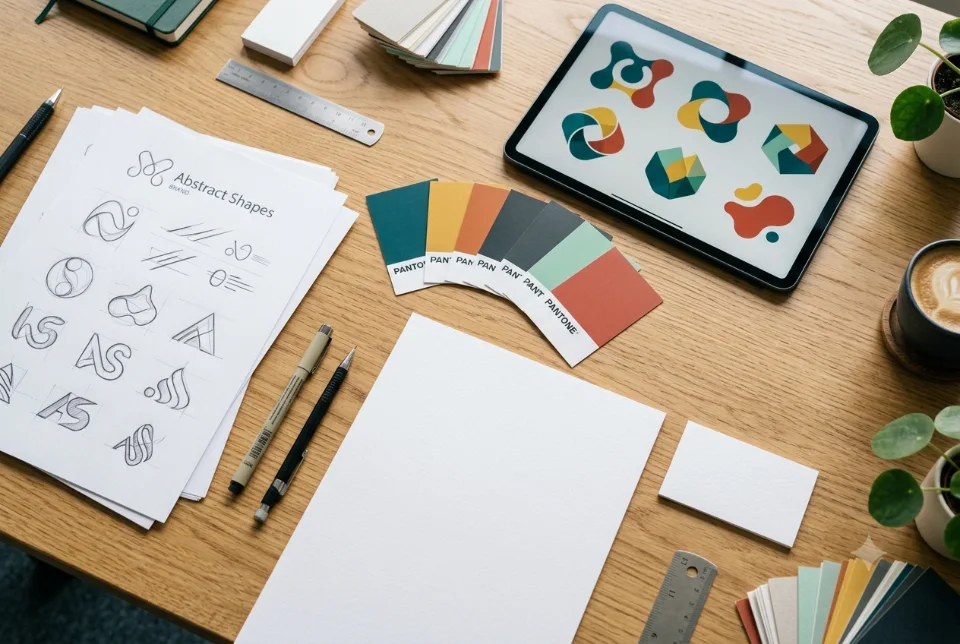
This brand identity guide gives you the short answer first: a brand identity is the set of visual and verbal choices that make your business recognisable, namely your name, logo, colours, fonts, imagery, tone of voice and the rules for using them. For a small business, the goal is not a fancy design but a consistent look and voice that customers can recognise on a signboard, a WhatsApp catalogue, an Instagram post and an invoice.
What brand identity actually means
People often use "brand", "logo" and "brand identity" as if they were the same thing. They are not. Your brand is what customers think and feel about you. Your brand identity is the part you control: the things you design and write so that customers form the right impression.
A logo is one piece of that. If your logo is blue on the website, orange on the visiting card and a different shade of blue on the shop board, customers will not connect them. A good brand identity guide fixes this by writing down the choices once and reusing them everywhere.
For a small business owner in India, this matters more than it first seems. Your customers meet you in many places at once: a Google Business Profile, a Reels feed, a printed brochure, a delivery packet, a WhatsApp status. Each place is a small chance to look like the same trustworthy business.
Why a brand identity guide helps small businesses
You do not need a big budget to benefit from a clear identity. In practice, it does this:
- It builds recognition. Repeating the same logo, colours and style helps people remember you after seeing you a few times.
- It builds trust. A tidy, consistent look signals that the business is organised. Mismatched designs can make a genuine business look casual or temporary.
- It saves time and money. When colours, fonts and layouts are decided, every new poster, offer or catalogue is faster to make and needs fewer revisions.
- It helps you stand apart. In a crowded local market where many shops sell similar things, a clear personality is often the only visible difference.
None of this guarantees sales, but it removes a common handicap: customers not knowing who you are.
The parts of a brand identity, step by step
Here is the core of this brand identity guide: the building blocks, in the order that works for most small businesses.
- Brand foundation. Write down who you serve, what you offer, what makes you different and three words that describe your personality (for example, friendly, reliable, premium). Everything else follows from this.
- Name and tagline. Pick a name that is easy to say, spell and search for. Check that the matching domain name and social media handles are available before you commit.
- Logo set. A primary logo, a compact version for small spaces such as a profile picture, and a one-colour version for stamps and embossing. Keep versions for light and dark backgrounds.
- Colour palette. Usually one main colour, one or two supporting colours and a neutral. Record the exact codes: HEX for screens, and CMYK values to share with your printer.
- Typography. Two fonts are usually enough, one for headings and one for body text. Choose fonts that support the languages you use; if you write in Hindi or another Indian language, test it before you decide.
- Imagery and graphic style. Decide whether you use real photographs, illustrations or icons, and what they should look like: bright or muted, close-up or wide, with or without people.
- Tone of voice. Decide how you speak. Formal or casual, English only or mixed with Hindi, short sentences or detailed explanations.
- Brand guidelines. A short document, often just a few pages, that records everything above so anyone who works for you can follow it.
You can build this in stages. A solo business can start with the logo, colours and fonts, and add the rest as it grows.
Start your brand identity guide with the foundation
The most common reason a new identity feels wrong is that the design was done before the thinking. Before you open any design tool, answer a few plain questions in writing.
- Who is your ideal customer, and where do they see you first?
- What do you want them to say about you in one sentence?
- Which three or four competitors do your customers compare you with, and how will you look different from them?
- Will you stay local, or are you aiming at customers across India?
Collect ten or fifteen designs you like, from any industry, and note what you like about each. This gives a designer, or you, a direction.
Choosing the logo, colours and fonts
Your logo should be simple enough to read on a phone screen and still look clear on a printed board. Avoid tiny details and thin lines that disappear when the logo is reduced. Our tips on logo design for small businesses go deeper on this.
For colours, think about meaning but do not over-trust it. Many people link green with nature or health, and blue with trust, but these are general associations, not rules. What matters more is that your palette looks different from your direct competitors and stays readable. Check that text has enough contrast against its background, because pale text on a pale background is hard to read on a phone in daylight.
For fonts, pick plain, readable families. Use one style for headings and one for body text, and stick to a few sizes. If your customers read Hindi, Marathi, Tamil or another language, choose a font family that has a matching script, so the look stays the same across languages.
Turn your brand identity guide into simple guidelines
Guidelines sound like something only big companies need, but a small version is very useful. A good one fits in a few pages and covers:
- Your logo versions and how much clear space to leave around them.
- Examples of wrong use, such as stretching the logo or changing its colours.
- The colour palette with HEX and CMYK values.
- Fonts, sizes and where each is used.
- Photo and graphic style, with a few sample images.
- Tone of voice, with a few example lines such as how you greet customers and how you write an offer.
Save the guidelines as a PDF and keep the logo files in a shared folder. When a freelancer, printer or staff member asks for your logo, you can send the exact right file, rather than a screenshot from WhatsApp.
Keep your brand identity consistent everywhere
Consistency is where most small businesses lose the benefit of their brand identity guide. The design is done, but a month later three people are making posters in three different styles. A few habits help.
- Create templates. Make reusable layouts for social media posts, offer posters, invoices, quotations and presentations, using your set colours and fonts.
- Use the same profile picture and name. Your Google Business Profile, Instagram, Facebook, WhatsApp Business and website should show the same logo and the same business name.
- Match print and screen. Colours look different on a screen and on paper. Ask your printer for a proof of important jobs, and use the CMYK values in your guidelines.
- Review every few months. Look at your last ten posts and your latest printed material side by side. If they do not look like the same business, update your templates.
Your website is also part of this. The way your pages are written should match your tone of voice, and our guide on writing website content that converts can help you keep it clear and on brand.
Where your identity shows up in India-specific touchpoints
Think about the places your customers really see you, and make sure each one gets attention.
- WhatsApp and WhatsApp Business. Profile photo, business description, catalogue images and quick replies should all use your logo and tone.
- Google Business Profile. Logo, cover photo and product photos are among the first things a local customer sees.
- Printed material. Visiting cards, brochures, price lists and packaging. For these, plan the print details early; a brochure and catalogue design built on your brand rules saves a lot of rework.
- GST invoices and quotations. Keep the legal details correct, and place your logo and colours neatly so that even paperwork looks like your brand.
- Packaging and labels. If you sell products, your box, sticker or label is often the only thing a customer holds in their hand.
Mistakes a brand identity guide should help you avoid
- Copying a competitor. It confuses customers and can cause legal trouble. Take inspiration, but make your own choices.
- Too many colours and fonts. More choices do not make a richer brand, only a messier one.
- Choosing only what you personally like. The identity must appeal to your customers, not just to you.
- Ignoring small sizes. A logo that looks great on a banner may be unreadable as a round profile picture.
- Skipping the files. Without vector files (such as SVG, AI or PDF) and clear versions, every future print job becomes a struggle.
- Never writing it down. If the rules live only in one person's head, they will not survive a new designer or a new employee.
It is also worth checking whether a name or logo is already in use before you invest in it. For trademark questions, speak to a qualified professional; this guide is design advice, not legal advice.
Doing it yourself or hiring a designer
You can build a basic brand identity yourself with free tools, a sensible palette and a lot of patience, and that is a fair start for a very early business. A designer helps most when you need a logo that is distinctive, a full set of files, a printed range, or an identity that must work across a website, packaging and social media.
Agency pricing depends on how many logo concepts you want, how many revisions are included, how many items are designed beyond the logo, and how much strategy work is part of the project. Typical market ranges vary widely, so treat any number you hear as a rough guide rather than a fixed price. At Ragnar Studios, identity work is a custom quote after we understand your requirements. You can read about our approach on the brand identity design page, or look at the wider logo design and branding services.
A simple action plan for this month
If you want to put this brand identity guide to work without a big project, try this sequence.
- Write your brand foundation: audience, difference and three personality words.
- Collect your current logo files, colours and fonts, and note every place they are used.
- Decide on one palette and two fonts, and record their codes.
- Update your profile pictures and business descriptions on Google, WhatsApp, Instagram and Facebook.
- Make five templates you will actually reuse: a post, a story, an offer poster, an invoice and a brochure cover.
- Put it all in a short guidelines PDF and share it with everyone who makes things for you.
Small, consistent steps beat a perfect launch that never gets finished. Once the basics are in place, the identity can grow with the business.
Frequently asked questions
What is a brand identity guide?
A brand identity guide is a short document that records how your business looks and sounds: logo versions, colours, fonts, imagery style, tone of voice and usage rules. It helps you, your staff, designers and printers produce consistent work without guessing. For a small business, even a few pages are enough to be useful.
What should a small business brand identity include?
At minimum: a logo set, a colour palette with HEX and CMYK codes, two fonts, a photo or graphic style and a tone of voice. Many businesses also add templates for social posts, invoices and brochures. You can start with the basics and add more as the business grows.
Is a logo the same as a brand identity?
No. A logo is one part of a brand identity. The identity also covers colours, typography, imagery, voice and the rules for using them. A logo alone cannot make a business look consistent across a website, packaging, social media and printed material.
How do I build a brand identity on a small budget?
Start with the thinking: your audience, your difference and three personality words. Then choose one palette and two readable fonts, make a simple logo, and create reusable templates. Free tools can handle this at the start. Hire a designer when you need distinctive work or a full set of files.
How much does brand identity design cost in India?
It varies widely with scope, such as concepts, revisions, number of items and strategy work. Market quotes can range from small freelance packages to larger agency projects, so treat any figure as a rough guide. Ragnar Studios gives a custom quote after understanding your requirements.
How long does it take to create a brand identity?
It depends on scope, how quickly feedback is given and how many revisions are needed. A simple logo, palette and font set can come together faster than a full identity with guidelines, packaging and templates. A designer can give a realistic estimate once the requirements are clear.
How do I keep my branding consistent across social media and print?
Use one set of logo files, a recorded colour palette and two fonts, and build templates for posts, offers and documents. Keep the same profile picture and business name everywhere. For print, use the CMYK values and ask the printer for a proof on important jobs.
Do I need to register a trademark for my brand?
Trademark registration is a legal matter, so it is best to speak to a qualified professional. From a design side, it helps to check that your name and logo are not already in use before investing in them. Do this early, not after printing stationery and packaging.
Want a brand identity built around your business, not a template? Share your requirements with Ragnar Studios on the brand identity design page and we will send a custom quote.
Free quote
Tell us about your brand
Fill this short form and send it on WhatsApp. We reply with questions or a quote. Nothing is charged on the website.
- Takes about two minutes
- Goes straight to Ragnar Studios on WhatsApp
- Prefer email? Write to info@ragnarstudio.com
Services that help with this.
Brand Identity Design
Ragnar Studios designs the full system around your logo: colours, fonts, imagery rules, stationery and a social media kit.
Explore →Logo & Branding Services
Ragnar Studios designs your logo and the identity around it: colours, fonts, stationery, social media look and brochures.
Explore →Brochure & Catalogue Design
Ragnar Studios designs brochures, catalogues, price lists and flyers as print-ready files and as light PDFs for WhatsApp.
Explore →More from the IT & design blog
Ready to start Brand Identity Guide for Small Business Owners in India?
Tell us what you need. We reply on WhatsApp with questions, next steps and a quote.