
Home / IT & Design Blog / How Much Does Mobile App Development Cost in India?
Apps & SoftwareHow Much Does Mobile App Development Cost in India?
There is no single price for an app. This guide explains what moves the number, what to budget after launch, and how to get quotes you can compare.
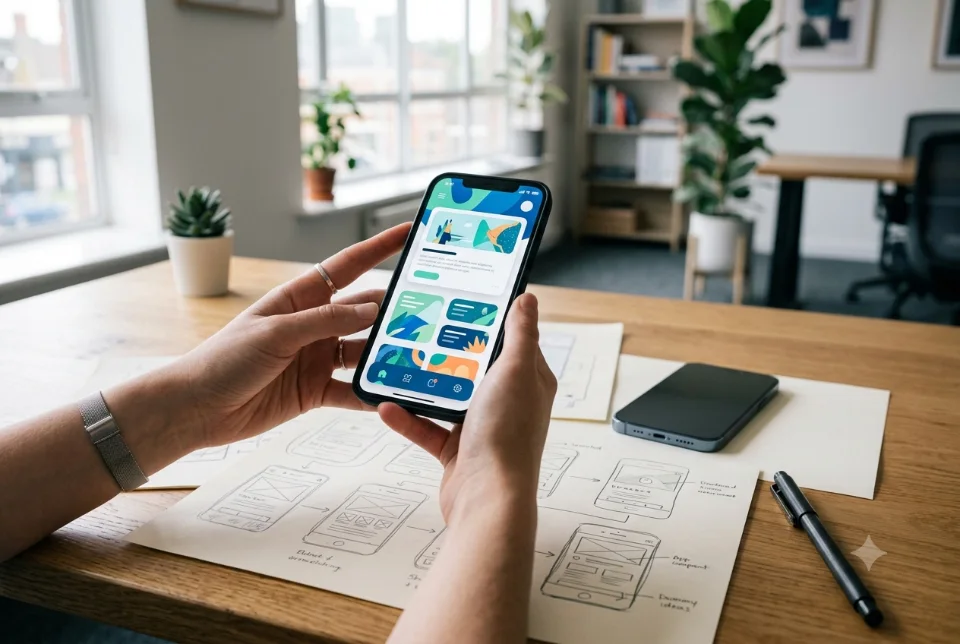
The mobile app development cost in India depends mainly on scope: how many screens you need, which features sit behind them, whether you need a backend, and how many platforms you launch on. Typical market ranges vary widely, from a simple app at a few lakh rupees to a complex product that runs into tens of lakhs. Treat any range you read online, including the ones below, as a rough guide and not a Ragnar quote.
The short answer on app cost in India
Indian vendor blogs commonly describe a basic app at roughly ₹1 lakh to ₹4 lakh, a mid-range app at roughly ₹4 lakh to ₹20 lakh, and a complex or enterprise app at ₹20 lakh and above. These are indicative market ranges collected from agency marketing, not independent surveys, and they are not a Ragnar quote. Two agencies can quote very different numbers for the same idea because they assume different scope.
That is why a single headline figure is not very useful. A better way to think about the mobile app development cost in India is as a sum of parts: design, front-end build, backend and database, third-party integrations, testing, store release, and the running costs after launch. The sections below walk through each part so you can build your own estimate before you speak to any agency.
What drives mobile app development cost in India
Almost every quote is shaped by the same handful of factors. If you understand them, you can predict which way a quote will move when you change your requirements.
- Number of screens and flows. A five-screen utility is a very different job from a forty-screen marketplace. Each screen needs design, build, and testing.
- Features and logic. Login, profiles, search, payments, chat, maps, notifications, and admin controls each add work. Real-time features and complex rules cost more than simple lists and forms.
- Backend and database. If your app saves data, shows personalised content, or lets users interact with each other, someone must build and host the server side. Many apps spend as much effort here as on the screens you can see.
- Platforms. Android only, iOS only, or both. How you build for both changes the budget noticeably, which we cover in our guide to native vs cross platform app development.
- Design depth. A clean standard interface is cheaper than custom illustrations, animations, and a full design system. Good UX work also reduces expensive rework later.
- Integrations. Payment gateways such as Razorpay or PayU, SMS and OTP providers, maps, WhatsApp, your existing ERP or billing tool, and analytics each take time to connect and test.
- Revisions and timeline. More feedback rounds and tighter deadlines raise cost. Unclear requirements are the most common reason a budget grows.
Indicative ranges by app complexity
Use these only to orient yourself. They are indicative market ranges in India, they change by year and by team, and they are not a Ragnar quote. Ragnar Studios does not publish a price list for apps, because the honest answer depends on your requirements.
- Simple app: a few screens, basic forms or content, no complex backend. Often described in the range of ₹1 lakh to ₹4 lakh.
- Mid-range app: user accounts, a backend, payments or bookings, an admin panel, and some integrations. Often described in the range of ₹4 lakh to ₹20 lakh.
- Complex app: multiple user roles, real-time features, heavy integrations, strict security, or large scale. Often described as ₹20 lakh and above.
Notice how wide each band is. The width is the point: scope, not geography alone, decides where you land. If a quote sits far below these bands, ask exactly what is left out. If one sits far above, ask what you are paying for that you could defer.
MVP versus full app: the biggest saving lever
The most effective way to control mobile app development cost in India is to build less on day one. A minimum viable product, or MVP, is the smallest version of your app that lets real users complete the one job it exists for. Everything else waits until you see how people actually use it.
For example, a food ordering startup might launch with menu browsing, cart, UPI payment, and order tracking, and postpone loyalty points, referral codes, and multi-language support. A booking app might launch with one city and one payment method. This keeps the first invoice smaller and lets you learn before spending on features nobody asked for.
The trade-off is honest to state. An MVP is not a cheap copy of the full product; it still needs sound design, a stable backend, and proper testing, or users will leave. If you are weighing this path, read our practical guide on how to build an MVP for your startup in India, and look at our startup MVP development service for how the scoping works.
Where the mobile app development cost in India goes
It helps to see the stages that most app budgets are split across. The exact share differs from project to project, so we avoid fixed percentages.
- Discovery and planning. Writing down features, user flows, and priorities.
- UI and UX design. Wireframes, screens, and clickable prototypes. Our UI/UX design services cover this stage on its own if you want to design first and build later.
- Development. The app itself plus the backend, admin panel, and API work.
- Testing. Checking behaviour on different Android phones, screen sizes, and OS versions, plus iOS devices if relevant. India has a very wide spread of phone models, so this matters.
- Store release. Preparing listings, screenshots, privacy policy, and submitting to Google Play and the App Store.
- Project management. Calls, updates, and changes. Ask that it is included in the quote.
Running costs hidden outside mobile app development cost in India
The build price is only part of the real mobile app development cost in India. Apps are living products, and several costs continue every month or year.
- Hosting and cloud services. Servers, databases, file storage, and bandwidth grow as your user count grows.
- Third-party service fees. SMS and OTP, maps, push notifications, email, and payment gateway charges are billed by those providers, not by the agency.
- Store fees. Google Play charges a one-time developer registration fee and Apple charges an annual developer programme fee. Check the current amounts on their official sites before budgeting, since they can change.
- Maintenance. New Android and iOS versions arrive every year and can break features. Bug fixes, security patches, and library updates need regular attention.
- Improvements. Once real users arrive, you will want new features. Plan a small ongoing budget for them.
Many teams plan for yearly maintenance as a meaningful fraction of the original build cost. We will not quote a fixed percentage because it depends on the app, so plan for it from the start.
How platform choice changes app development cost
Choosing platforms is one of the earliest cost decisions. Building two separate native apps means two codebases and more testing. A cross-platform approach shares much of the code between Android and iOS and can reduce the effort, though not by half, because design, backend, and testing still remain.
In India, Android has a large share of devices, so many founders launch on Android first and add iOS once the idea is proven. That is a reasonable approach if your audience is price-sensitive or in smaller cities, but a premium or urban audience may lean toward iPhones. Ask about your own customers before assuming. Our comparison of native and cross-platform development explains when each option fits.
Also ask whether you truly need an app. If your customers mainly browse, read, or book occasionally, a good mobile website or web tool may do the job at lower cost. Our article on the difference between a web app and a website can help you decide.
How to compare app quotes fairly
When three agencies give three prices, the numbers are rarely comparing the same thing. Use this checklist to make them comparable.
- Share one written brief. Give every agency the same feature list, platforms, and user types so they quote the same scope.
- Ask for an itemised breakdown. Design, development, backend, admin panel, testing, and release should appear as separate lines.
- Check what is excluded. Hosting, third-party fees, store accounts, and post-launch support are common omissions.
- Confirm ownership. You should receive source code, design files, and access to your store and cloud accounts.
- Ask about revisions. How many feedback rounds are included, and how are changes handled once development starts?
- Look at past work for similar scope. Ask for relevant examples and talk about what was hard in them.
A low price is not automatically a bad sign, and a high price is not automatically quality. The real signal is whether the agency asks good questions about your users before naming a number.
Ways to keep mobile app development cost in India under control
You cannot negotiate away real work, but smart choices can lower your mobile app development cost in India without damaging the product.
- Rank features. Split them into must have, should have, and later. Build only the first group first.
- Use proven components. Standard login, payments, and notification services are cheaper and safer than custom ones.
- Prepare your content. Logo, text, product data, and images delivered on time prevent paid delays.
- Decide quickly. Slow feedback stretches timelines and inflates cost.
- Launch in phases. One city, one language, or one user role at first, then expand.
- Test with real users early. A clickable prototype shown to ten genuine customers can save you from building the wrong thing.
How Ragnar Studios approaches app quotes
At Ragnar Studios we share a quote after understanding your requirements, not before. We have built 2,000+ websites and Shopify stores, and our work extends to mobile and web apps, custom software, portals, and design. For apps, the first step is a conversation, usually over WhatsApp, phone, or email, where we ask about your users, your must-have features, your platforms, and your budget range.
From that we can suggest a phased plan, for example a focused first release followed by later additions, and give a quote that lists what is included. Timelines depend on scope, so we do not promise fixed dates in advance. You can see how we work on our mobile app development page and send your idea through the free quote form there.
Before you ask for a quote
A little preparation makes every quote more accurate and usually lower. Write down who the app is for and the single problem it solves. List ten features, then circle the three you cannot launch without. Decide whether you need Android, iOS, or both. Note any systems it must connect to, such as payments, accounting, or an existing website. Set a realistic budget range, including money for hosting, store fees, and a few months of fixes after launch.
With that brief in hand, mobile app development cost in India becomes something you can discuss calmly and compare sensibly, instead of a guess. Be sceptical of anyone who names a firm price after a two-minute call, and remember that results from any app, including downloads and revenue, depend on your market, your marketing, and your effort, and are never guaranteed by the developer.
Frequently asked questions
How much does it cost to make an app in India?
It depends on scope. Indian agency blogs often describe simple apps at roughly ₹1 lakh to ₹4 lakh, mid-range apps at ₹4 lakh to ₹20 lakh, and complex apps above that. These are indicative market ranges, not a Ragnar quote. Features, backend, platforms and design depth decide where your project lands.
Why do app development quotes vary so much?
Quotes vary because agencies assume different scope, team seniority and quality. One may include a backend, admin panel and testing while another leaves them out. Give every agency the same written brief and ask for an itemised breakdown, so you compare like with like instead of headline totals.
Is it cheaper to build an app for Android only?
Usually yes, because you build and test one version instead of two. Many Indian founders launch on Android first, since it covers a large share of devices, then add iOS once the idea is proven. Check which phones your own customers use before deciding, because audiences differ by city and income.
What is an MVP and does it reduce app cost?
An MVP, or minimum viable product, is the smallest version of your app that lets users complete its main job. It reduces the first invoice because secondary features wait until you see real usage. It still needs solid design, a stable backend and testing, so it is a focused product, not a cheap copy.
What are the yearly costs after the app is live?
Expect hosting and cloud fees, third-party charges such as SMS, maps and payment gateways, Apple and Google developer account fees, and maintenance for OS updates and bug fixes. Check current store fees on their official sites. Many teams also budget for new features once real users give feedback.
How long does it take to develop a mobile app?
It depends on scope, so we do not promise fixed timelines. A small app with few screens takes far less time than a marketplace with payments, roles and an admin panel. Clear requirements, quick feedback and ready content shorten the schedule, while changing scope midway usually extends it.
Do I own the source code of my app?
You should, but confirm it in writing before work starts. Ask that source code, design files and access to your Google Play, App Store and cloud accounts are handed over to you. Agreeing ownership terms early avoids disputes later if you change agencies or want in-house developers to continue.
Can I get a fixed price quote for my app idea?
Yes, once requirements are clear. At Ragnar Studios we share a custom quote after understanding your features, platforms and integrations, because we do not run a standard price list for apps. Send your brief by WhatsApp, phone or email and we will explain what is included.
Have an app idea and want a clear, itemised quote? Share your requirements with Ragnar Studios through our mobile app development page and we will respond with a custom quote after understanding your scope.
Free quote
Tell us about your app
Fill this short form and send it on WhatsApp. We reply with questions or a quote. Nothing is charged on the website.
- Takes about two minutes
- Goes straight to Ragnar Studios on WhatsApp
- Prefer email? Write to info@ragnarstudio.com
Services that help with this.
Mobile App Development
We plan, design, build and publish Android and iOS apps for startups and small businesses.
Explore →Startup MVP Development
Ragnar Studios helps founders in India turn an idea into a small, working first version that real users can try.
Explore →UI/UX Design
Ragnar Studios designs the flows, wireframes and visual screens for your website, web app or mobile app before a single line of…
Explore →More from the IT & design blog
Ready to start How Much Does Mobile App Development Cost in India??
Tell us what you need. We reply on WhatsApp with questions, next steps and a quote.