
Home / IT & Design Blog / Google Ads vs Meta Ads: Which One Should a Small Business St
SEO & GrowthGoogle Ads vs Meta Ads: Which One Should a Small Business Start With?
Both platforms can bring enquiries, but they work in very different ways. Here is a plain guide to choosing, budgeting and tracking, written for Indian small business owners.
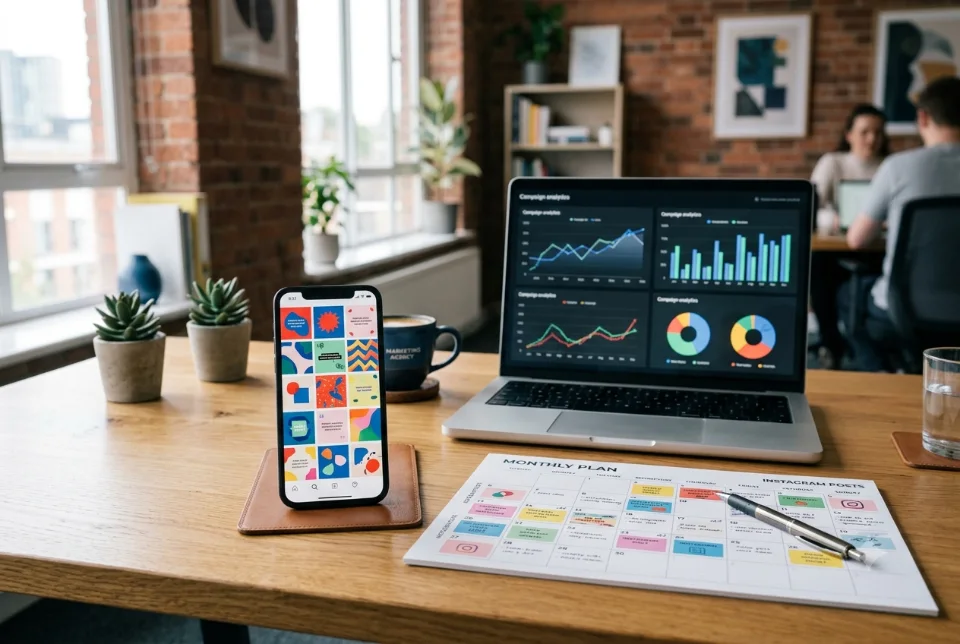
The short answer on Google Ads vs Meta Ads: Google Ads shows your business to people who are already searching for what you sell, while Meta Ads (Facebook and Instagram) shows your offer to people who are scrolling and did not ask for it. Search suits urgent, high-intent needs such as a plumber, a CA or a dental clinic. Meta suits products people buy on impulse or by looking at them. Neither is guaranteed to work, and many small businesses end up using both in different proportions.
How Google Ads and Meta Ads differ at the core
The easiest way to understand Google Ads vs Meta Ads is to compare the moment a person sees your ad. On Google, someone types a need into the search box. Your ad appears next to the results because you chose to bid on that need. The person is already looking, so you are answering a question they asked.
On Meta, the person opened Instagram or Facebook to see reels, family photos or news. Your ad appears in the feed, in stories or between reels. You are interrupting. That is not bad, because a good creative can make people stop and want something they had not thought about, but you have to earn attention first and the intent is usually softer.
Intent versus interruption in Google Ads vs Meta Ads
Google Ads is like standing at the entrance of a lane where customers walk in saying, "I need a mobile repair shop." Meta Ads is like putting a bright stall near a crowd walking past for chai.
Search traffic tends to be closer to a purchase decision, but there are fewer people searching for any given niche, and competitors bid for the same words. Social traffic is much larger and cheaper to reach, but you have to create the desire. A new product that nobody searches for yet cannot be found on Google, so Meta is often the only way to introduce it.
If you want a wider view of how paid search relates to organic search, our guide on SEO vs SEM explains where each fits.
Which business types suit Google Ads vs Meta Ads
There is no universal winner, but patterns are clear enough to use as a starting point.
- Urgent local services: electricians, AC repair, lawyers, hospitals, packers and movers, and coaching centres usually do better on Google, because the customer is searching right now.
- Considered B2B services: software development, accounting, manufacturing suppliers and consultants often start with Google, since decision makers search for vendors by name of the service.
- Visual or impulse products: fashion, jewellery, home decor, gifts, food brands and beauty products usually suit Meta, because the product sells when people see it.
- New or unknown offers: a new brand, a fresh product category or an event is easier to launch on Meta, since there is no search demand yet.
- Restaurants, salons and gyms: often a mix. Google Maps and search capture people nearby who want it today, while Instagram builds familiarity and repeat visits.
- Online stores: product searches on Google can convert well, while Meta can bring buyers who did not know the product existed. Many stores use both.
If your business is location based, strengthening your free listing first is wise. Our guide to local SEO for Indian small businesses covers that groundwork.
Budget and cost differences between Google Ads and Meta Ads
In Google Ads vs Meta Ads comparisons, cost per click is often higher on Google because several businesses compete for each valuable search term. Cost per click on Meta is often lower, but a click from a scrolling user is usually less likely to turn into a customer. So the cheaper click is not automatically the cheaper enquiry. Judge both by cost per lead or cost per sale, not cost per click.
Costs differ a lot by industry, city, season and quality of the ad. Treat any number you read on a blog, including indicative ranges, as a rough guide and not a promise. The honest way to find your real cost is a small test: run a modest budget for a few weeks, record enquiries and compare.
Remember that ad spend is paid directly to Google or Meta, separate from any agency fee. A management fee covers the work of setting up, testing and reporting, not the media itself. Our Google Ads and SEM service page explains how this works.
When weighing Google Ads vs Meta Ads on a small budget, a practical starting approach with a limited monthly budget is to put most of it on one platform until you learn what works, rather than spreading thin across both. Thin budgets on two platforms often produce too little data on either.
How to choose between Google Ads vs Meta Ads: a simple checklist
Use these steps to decide where your first rupee should go in the Google Ads vs Meta Ads question.
- Ask whether people search for you. Type your service and your city into Google. If you see ads and map results, demand exists and Google is worth testing. If nothing relevant appears, Meta is likelier to be the better start.
- Check how fast the decision is made. A burst pipe is decided in minutes. A wedding photographer is decided over weeks. Fast decisions favour Google, slow decisions benefit from Meta reminders.
- Look at your product. If it looks good in a photo or a short video, Meta can show it off. If it needs explanation, search plus a strong landing page works well.
- Count your monthly budget honestly. If it is very small, pick one platform and one clear offer.
- Define one goal. Calls, WhatsApp chats, form fills or store purchases. Different goals need different campaign setups.
- Check your follow-up speed. Leads from both platforms go cold fast. If nobody answers WhatsApp within the hour, no platform will fix that.
Answering these six questions usually makes the Google Ads vs Meta Ads choice much clearer than any general comparison.
Creatives, keywords and targeting on each platform
On Google Search, the main inputs are keywords and ad text. You choose search terms such as "interior designer in Pune", write headlines that match what the person typed, and send them to a relevant page. Negative keywords matter: excluding words like "free", "jobs" or "course" can save money from irrelevant clicks.
On Meta, the creative is the main lever. A clear image, a short reel, a simple headline and one offer will do more than clever audience tricks. Audiences are built from location, age, interests and behaviours, and later from people who visited your website or engaged with your page. Content in Hindi or your regional language often connects better with local buyers than polished English.
Creative fatigue is real on Meta. The same image shown many times gets ignored, so plan fresh variations. Our Meta Ads service covers creative and campaign management for Facebook and Instagram.
Landing pages and follow-up decide the result on both
Many ad accounts lose money not because of the platform but because of what happens after the click. A visitor who lands on a slow homepage, has to hunt for a phone number or finds a form with ten fields will leave.
- Match the promise: if the ad says "Free site visit this week", the page should lead with exactly that.
- Keep it fast on mobile: most Indian visitors arrive on phones, often on average connections.
- Offer WhatsApp and call buttons: many customers prefer a quick chat to filling a form.
- Keep forms short: name, phone and one question is often enough.
- Reply quickly: speed of reply is part of your advertising result.
A focused page built for one offer usually works better than sending paid traffic to a general homepage. See our landing page design service if you need one.
Tracking and measurement before you spend
Set up measurement first, or you will not know which platform deserves more money. At minimum, you want to know how many calls, WhatsApp chats and forms each campaign produced.
On the website, conversion tracking is set up inside the ad platforms and usually through Google Tag Manager or the platforms' own tags. Calls from ads can be tracked with call extensions or call reporting. WhatsApp clicks can be tracked as events. For leads that arrive by phone, a simple habit works: ask every new customer, "How did you find us?" and note it in a sheet.
Be aware that tracking is never perfect. Privacy settings on phones and browsers hide some activity, and each platform tends to claim credit for the same sale. Compare the platform reports with your own sales sheet, and trust the sheet when they disagree.
Common mistakes in Google Ads vs Meta Ads campaigns
Some mistakes show up again and again among small businesses new to paid advertising.
- Boosting posts without a goal: the boost button is convenient, but it rarely gives you a structured campaign with a clear objective.
- Using broad keywords: bidding on a single generic word like "website" attracts curious searchers instead of buyers.
- Targeting the whole country: a local business should target its service area, not all of India.
- Changing everything every day: ad platforms need time to learn. Frequent edits restart learning and hide what is working.
- Ignoring the mobile experience: a page that looks fine on a laptop can be painful on a phone.
- Expecting instant results: early weeks are for testing and learning, not for judging final performance.
When to use both platforms together
Once one platform is producing steady enquiries, adding the other can help. A common pattern is search ads to capture people ready to buy, and Meta ads to remind people who visited your site but did not enquire. This second group often responds better than cold audiences, since they already know you.
Meta can also create awareness for a new service, which later shows up as more people searching your brand name on Google. That is a slow, indirect effect, so measure it over months and not days.
Working with an agency or doing it yourself
Small campaigns can be run in-house by a careful owner who has time to learn. The tradeoff is time: account structure, tracking and testing take hours every week. If you prefer to hand this over, ask a prospective partner what they will measure, how often they report, who owns the ad accounts and how fees and ad spend are separated. Ads should run in an account you own, so you keep access if you ever switch.
Be careful with anyone who promises guaranteed leads, fixed rankings or fixed returns. Nobody can promise these, because competition, budget, product and website quality all play a part. For a broader view of what an agency does, read what a digital marketing agency does.
Next steps for your first month of Google Ads vs Meta Ads
Pick one goal, one platform and one offer. Fix your website or landing page so a mobile visitor can enquire in two taps. Set up tracking. Run a small test for several weeks, note your cost per enquiry, and only then decide whether to scale, change the creative or add the second platform. That calm, measured approach beats guessing between Google Ads vs Meta Ads based on someone else's results.
Frequently asked questions
Which is better for a small business, Google Ads or Meta Ads?
Neither is better for every business. Google Ads usually suits services people search for urgently, such as repairs, clinics and legal help. Meta Ads usually suits visual or impulse products and new offers. Look at whether people search for what you sell, how fast they decide and what your budget is, then test one platform first.
Are Meta Ads cheaper than Google Ads in India?
Clicks on Meta are often cheaper, but a cheaper click does not always mean a cheaper customer, since scrolling users have softer intent. Costs vary by industry, city and ad quality. Compare cost per enquiry or cost per sale over a few weeks of testing instead of relying on general figures from blogs.
Can I run Google Ads and Meta Ads together?
Yes, many businesses do. A common approach is to use search ads to capture people ready to buy and Meta ads to remind visitors who did not enquire. Start with one platform until tracking works and you have steady results, then add the second with a clear budget so neither is starved.
How much budget do I need to start paid ads?
There is no fixed minimum, and it depends on your industry and city. Start with an amount you can afford to treat as a test, enough to collect a few weeks of data. Ad spend is paid directly to Google or Meta and is separate from any agency fee, so ask for both to be shown clearly.
Is Google Ads or Facebook Ads better for local businesses?
Local businesses often start with Google Ads and Google Business Profile, because nearby customers search when they need something today. Facebook and Instagram help build familiarity, show offers and bring repeat visits. Many local businesses use search for demand capture and Meta for reminders and visual proof of their work.
How long before Google Ads or Meta Ads show results?
Ads can start showing within a day of approval, but useful results take longer. The first few weeks are for testing keywords, creatives and audiences. Results depend on competition, budget, website quality and how quickly you respond to enquiries, so nobody can honestly promise a fixed timeline or number of leads.
Do I need a website to run Google Ads or Meta Ads?
A website or landing page is strongly recommended, because it explains your offer and collects enquiries. Meta can also drive chats on WhatsApp or Instagram, and Google can show call-only ads. Even then, a simple mobile-friendly page with your address, services and contact buttons builds trust and usually improves results.
How do I know whether my ads are working?
Track calls, WhatsApp chats, form fills and sales, not just clicks or likes. Use conversion tracking in each platform and ask every new customer how they found you. Compare platform reports with your own sales sheet, because each platform may claim credit for the same sale and tracking is never perfect.
Not sure whether to start with search or social? Share your business, city and monthly budget, and we can suggest a sensible test plan through our Google Ads and SEM service.
Free quote
Tell us about your Google Ads needs
Fill this short form and send it on WhatsApp. We reply with questions or a quote. Nothing is charged on the website.
- Takes about two minutes
- Goes straight to Ragnar Studios on WhatsApp
- Prefer email? Write to info@ragnarstudio.com
Services that help with this.
Google Ads (SEM)
Ragnar Studios sets up and manages Google Ads campaigns for Indian businesses, from keyword research to reporting.
Explore →Local SEO
We set up and improve the signals Google uses to show your business for searches in your city: your profile, listings, location…
Explore →Meta Ads Agency
Ragnar Studios sets up and manages Facebook and Instagram campaigns for Indian businesses, from the first objective to…
Explore →More from the IT & design blog
Ready to start Google Ads vs Meta Ads: Which One Should a Small Business St?
Tell us what you need. We reply on WhatsApp with questions, next steps and a quote.