
Home / Blog / The Complete Digital Marketing Guide for Small Business in I
SEO & GrowthThe Complete Digital Marketing Guide for Small Business in India
A plain-language pillar guide to SEO, local search, Google and Meta ads, social media, WhatsApp, tracking, budget and a 90-day plan for Indian small businesses.
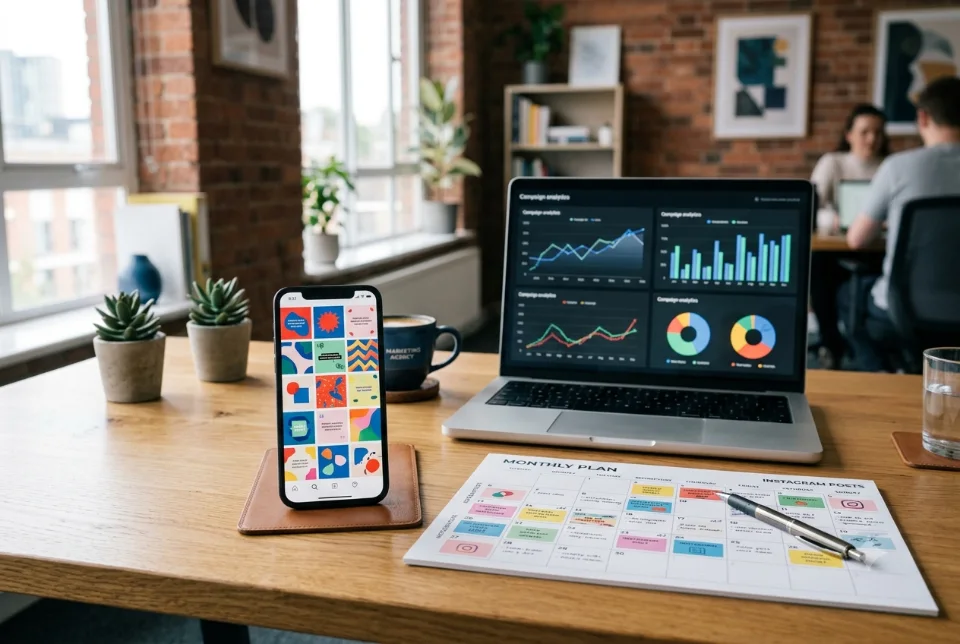
Digital marketing for small business means using the internet, from Google search and maps to Instagram, WhatsApp and email, to get the right people to find you, trust you and contact you. This guide explains each channel in plain language, shows how they fit together, and gives you a budget, tracking method and 90-day plan. It is written for Indian owners who are short on time and money, so it focuses on practical order of work. No channel guarantees leads or sales, and results depend on your market, offer, budget and consistency. Our guide to Digital Creatives covers this in more depth.
Related reading and services: digital marketing agency in India, digital marketing agency in Delhi, SEO company in India and digital marketing agency service.
Key takeaways
- Start with a clear goal, such as calls, WhatsApp enquiries or online orders, and decide how you will count them.
- Your website and Google Business Profile are the foundation. Ads and social posts work harder when they send people to a clear, fast page.
- Pick two or three channels you can do well rather than six you cannot sustain.
- SEO is slow and cheap per visit over time. Ads are fast but stop when the money stops.
- WhatsApp and email turn first-time visitors into repeat customers.
- Track enquiries, not likes, and review the numbers monthly.
What digital marketing is and what it includes
Digital marketing is every online activity that helps customers discover your business and take an action. The main channels are:
- Search engine optimisation (SEO): earning free visibility on Google.
- Search ads (SEM): paying Google to show your ad to people searching right now.
- Local search: your Google Business Profile and reviews, which drive calls and visits.
- Social media: organic posts and community on Instagram, Facebook, YouTube and LinkedIn.
- Social ads: paid reach on Meta platforms, aimed at defined audiences.
- Content and video: articles, reels and guides that answer questions.
- Email and WhatsApp: direct messages to people who already know you.
You do not need all of them. A neighbourhood bakery may thrive on a Business Profile, Instagram and WhatsApp, while a B2B manufacturer may rely on SEO, LinkedIn and email. If you are weighing whether to hire help, our explainer on what a digital marketing agency does lists the work and the reports to expect. Most delays around complete digital marketing guide come from unclear feedback, so keep comments specific and in one place.
Step 1: set goals, audience and your offer
Before spending anything, answer four questions in writing.
- What is the goal? For example, 30 phone enquiries a month, 20 online orders or 10 demo bookings. Choose one main goal at a time.
- Who is the customer? Describe their city, age range, what they need, what worries them and where they spend time online. A parent searching for a coaching class behaves differently from a shop owner searching for billing software.
- What makes you worth choosing? Price, speed, quality, location, service or specialisation. Write one clear sentence and use it everywhere.
- What is the next step? Call, WhatsApp, fill a form, visit the shop, order online. Make exactly one step obvious on every page and post.
Then work out what an enquiry is worth. If one in four enquiries becomes a customer and a customer is worth a few thousand rupees to you, you can judge how much it makes sense to pay for each enquiry. These are your own numbers, not industry promises, and they keep spending honest. Ask how complete digital marketing guide will be tested or checked before it is called finished.
Want this done for you? Ragnar Studio's handles Digital Marketing Agency. See how it works or get a free quote.
Step 2: build a website that converts visitors
Almost every channel sends people to your website, so it has to work. A good small business website loads quickly on a phone, states what you do and where within the first screen, shows real photos and proof, and offers a tap-to-call or WhatsApp button. It should also carry basic SEO structure from the beginning, with clear titles, one page per service and a contact form that works.
If you are starting from zero, a simple site is enough. Our small business website design service builds focused sites for exactly this purpose, and our fixed-price 5-page website at ₹5,999 suits many local businesses (domain and hosting are separate, so ask us what applies to your project). For ads, a dedicated landing page usually converts better than a busy home page.
Do not forget trust items for Indian buyers: a clear phone number, address or service area, GST details if you invoice businesses, delivery and return rules for stores, and payment options like UPI.
Step 3: SEO and content for steady, lower-cost traffic
SEO helps people find you when they search for what you sell. It is slower than ads, but each good page can keep bringing visitors without a per-click fee. Start with the basics: a page for each service, clear titles and headings, fast loading, mobile friendliness and useful answers to common questions. Then add helpful articles that match what customers ask before buying. Your own words and real details make complete digital marketing guide stronger than generic text ever will.
Content works best when it is specific. A page that explains what affects the cost of your service, how long it takes and what to prepare earns more trust than a vague description. Write in the language your customers use, including Hindi or regional language pages where relevant. If you need a structure to follow, read how to write website content that converts.
For a full walkthrough of keywords, on-page work, technical fixes, links and tracking, use our pillar SEO guide for small businesses in India. If you would rather hand it over, see our SEO services for small businesses. SEO results depend on competition, website quality and time, so plan in months.
Step 4: win local search with Google Business Profile
If customers come to you or you serve a city, your Google Business Profile is one of the most valuable free assets you have. It controls how you appear in Google Maps and the local pack, and it shows your phone number, hours, directions, photos and reviews.
To get the most from it:
- Pick the correct main category and add every service you provide.
- Upload real photos of your premises, team and work, and refresh them regularly.
- Keep hours accurate, especially around festivals and holidays.
- Ask happy customers for reviews through a simple WhatsApp message with your review link, and reply to every review.
- Use the posts and Q&A features to share offers and answer common questions.
Our Google Business Profile optimisation service covers setup, cleanup and ongoing updates if you prefer help.
Step 5: Google Ads for people ready to buy
Google Ads puts your business at the top of results for searches such as "AC repair near me" or "CA for GST filing". You pay when someone clicks, so the quality of your keywords, ad text and landing page decides whether the money works. Because people are actively searching, search ads often bring high-intent enquiries, but competitive terms can be expensive.
Keep a small campaign tight. Choose a few specific keywords, add negative keywords to block irrelevant searches, limit ads to your service area, set a daily budget you are comfortable with and send clicks to a page that matches the ad. Track calls and form submissions as conversions. Ad spend is paid directly to Google and is separate from any agency management fee. Revisit complete digital marketing guide every few months, because needs, tools and expectations change over time.
Our Google Ads and SEM services page explains how setup and management work. If you are unsure which paid platform to try first, compare them in Google Ads vs Meta Ads for small business.
Step 6: Meta Ads on Facebook and Instagram
Meta Ads help when people do not yet know they need you. They suit visual products, new launches, events, local offers and building an audience. You choose location, age and interests, then show images, videos or carousels. Results depend heavily on the creative (the image or video), the offer and the audience.
Start with a modest test budget and one clear objective, such as messages on WhatsApp or traffic to a landing page. Run two or three creatives and let them collect enough data before you judge. Keep retargeting in mind: people who visited your site or watched your video are more likely to respond than cold audiences. As with Google, the ad budget is paid directly to Meta. Our Meta Ads management covers audience setup, creatives and reporting.
Step 7: social media, video and reels
Social media builds familiarity. It lets customers see your work, your people and your reliability before they ever message you. The trick is consistency and variety, not volume. A simple weekly mix might include a customer result or project photo, a short tip, a behind-the-scenes clip, an offer and a customer review. Start small with complete digital marketing guide, learn from the first results and then expand what works.
Short videos and reels often get more reach than static posts. They do not need a big studio: a steady phone, good light, clear audio and a hook in the first seconds are enough to begin. If you want polish, our video editing and reels service handles cuts, captions and formats. Setting a sensible budget for complete digital marketing guide early makes every later choice simpler.
Plan posts in advance with a calendar so you are not scrambling each day. Our guide to a social media content calendar for small business includes a simple weekly structure. Post where your customers are: Instagram and Facebook for consumer brands, LinkedIn for B2B, YouTube for how-to content. For managed posting and community replies, see our social media marketing services.
Step 8: WhatsApp and email to keep customers coming back
It costs far more to find a new customer than to sell again to an existing one. WhatsApp and email are your direct lines. In India, WhatsApp is often the channel customers answer fastest, so use WhatsApp Business with a catalogue, quick replies and labels to organise leads.
Good habits include:
- Ask permission before adding people to broadcast lists, and make opting out easy.
- Send useful messages: order updates, appointment reminders, new arrivals, seasonal offers and care tips.
- Keep a simple email list of customers and enquiries, and send a short monthly note with one useful idea and one offer.
- Avoid sending too often. One valuable message beats five pushy ones.
If you want help with templates, automation and list management, see our email and WhatsApp marketing services.
Step 9: measure what matters
Choose a short list of numbers and check them monthly. For most small businesses these are enquiries received (calls, WhatsApp chats, forms), cost per enquiry for paid campaigns, enquiries that became customers, top sources of visitors and reviews gained. Vanity numbers such as likes and followers matter only if they connect to enquiries.
Set up free tools: Google Analytics for website behaviour, Google Search Console for search performance, call tracking or a separate number for ads, and a tagged WhatsApp link so you can tell where chats came from. Write down each month what you changed and what happened, so you learn from each test. Improve in this order: fix what loses people on the website, then improve the offer, then scale what works. Also train whoever answers the phone or WhatsApp: a slow or unclear reply can waste the best campaign, so reply quickly, ask a few qualifying questions and share a simple quote or next step. Log each enquiry in a basic sheet with its source, date and outcome, because this one habit shows you which channel truly pays for itself. If complete digital marketing guide involves several people, nominate one person to collect feedback and make the final call.
Budget: what digital marketing costs
There is no single right budget, and rupee ranges you see online are rough guides, not quotes. Costs fall into three buckets. First, the setup cost of a website, tracking and profiles. Second, the ongoing work, whether done by you, a freelancer or an agency, covering content, SEO, social posts and reporting. Third, the media budget, meaning money paid directly to Google or Meta for ads.
A sensible approach for a tight budget is to put money first into a fast, clear website and a complete Business Profile, then add one paid channel with a small test budget, then reinvest what works. Agency fees depend on scope, number of channels, content volume, reporting depth and competition, and they are separate from ad spend. Always ask for a written scope that says what is included each month. Ragnar Studio's gives a custom quote after understanding your requirements.
Common budget mistakes are worth avoiding. Spending on ads before the website can convert, splitting a small budget across too many platforms, changing campaigns every few days before enough data arrives, and paying for followers or reviews that do not bring customers. Seasonal timing matters too: festive periods, wedding seasons, admission months and tourist peaks raise competition and ad costs, so plan ahead and start building awareness and reviews before the rush rather than during it.
How to choose a digital marketing agency
A good agency behaves like a partner. Use this checklist when comparing options:
- Clear scope in writing: deliverables, number of posts, campaigns, reports and revisions.
- Realistic promises: be careful with anyone who guarantees rankings, leads or sales.
- Access and ownership: your ad accounts, Business Profile, analytics and domain should stay in your name.
- Reporting you understand: enquiries and cost per enquiry, not just impressions.
- Fit for your size: experience with businesses like yours, and a communication style that suits you, such as WhatsApp updates and calls in your language.
- Transparent pricing: management fee and ad spend listed separately.
Compare a full-service option such as our digital marketing agency in India service against freelancers by asking the same questions of each. Fewer moving parts can help a small team, while a specialist freelancer may suit a single channel. Good notes on complete digital marketing guide save hours later, especially when more than one person is involved in decisions.
A 90-day digital marketing plan
- Days 1 to 15, foundation. Define the goal and offer, fix website basics, set up Analytics, Search Console, a tagged WhatsApp link and your Business Profile.
- Days 16 to 30, first assets. Publish or improve your top service pages, collect your first reviews and create a month of social content using a calendar.
- Days 31 to 60, test one paid channel. Launch a small Google Ads or Meta Ads test with one offer and one landing page. Keep notes on what each creative and keyword produces.
- Days 61 to 75, nurture. Start a WhatsApp and email routine for enquiries and past customers. Follow up every lead within a day.
- Days 76 to 90, review and decide. Compare cost per enquiry across channels, keep what works, pause what does not and plan the next quarter.
Summary: digital marketing for small business in short
Digital marketing for small business works best as a system. Set a clear goal, build a website and Google Business Profile that earn trust, add SEO and useful content for steady traffic, use ads for faster tests, nurture customers on WhatsApp and email, and track enquiries rather than likes. Start small, stay consistent and review monthly. Nothing here is guaranteed, because results depend on competition, budget, offer and time, but a clear order of work keeps your money and effort pointed in the right direction. When you look at complete digital marketing guide, compare scope and clarity first and price second.
Frequently asked questions
Where should a small business start with digital marketing?
Start with a clear goal, a fast mobile website and a complete Google Business Profile. Then add one channel, such as local SEO, Google Ads or Instagram, and track enquiries. Building the base first stops ad money from being wasted on a weak page.
How much should a small business spend on digital marketing?
It depends on your goal, market and which channels you use. Work out what an enquiry is worth to you, then test a small budget and reinvest what works. Agency fees and ad spend are separate costs, so ask for each in writing.
Is SEO or paid advertising better for a small business?
They do different jobs. Ads bring quick traffic and stop when you stop paying, while SEO builds slowly and keeps working. Many small businesses start with local search and a small ad test, then grow SEO and content over time.
Which social media platform is best for small business?
Choose by where your customers spend time. Instagram and Facebook suit most consumer brands, LinkedIn suits B2B services and YouTube suits how-to content. It is better to be consistent on one or two platforms than thin on five. Deadlines around complete digital marketing guide work best when they include buffer time for feedback and changes.
How long does digital marketing take to show results?
Paid campaigns can produce enquiries within days, though they need testing. SEO and content usually take months. Results vary with competition, offer and website quality, so be careful with any provider who promises fixed results by a fixed date. Share your references for complete digital marketing guide, including things you like and things you want to avoid.
Do I need a website for digital marketing for small business?
In most cases yes. A website is where ads, search and social posts send people to learn more and contact you. A simple, fast site with clear contact options is enough to start, and it can grow as your business does.
Can I run digital marketing myself without an agency?
Yes, many owners handle a Business Profile, WhatsApp, social posts and basic SEO themselves. Consider an agency when you lack time, need ads managed well or want technical SEO and reporting. Keep ownership of all your accounts either way.
Is WhatsApp marketing allowed for small businesses in India?
WhatsApp Business is widely used by Indian small businesses for catalogues and customer chats. Message people who have contacted you or given permission, keep content useful, and allow easy opt-out. Avoid bulk messaging to people who did not agree to hear from you.
Want help turning this plan into action? Ragnar Studio's can set up and run your channels through our digital marketing agency service, with a custom quote after we understand your goals. For complete digital marketing guide, ask for a simple timeline with milestones so you can see progress without chasing.
Free quote
Tell us about your marketing needs
Fill this short form and send it on WhatsApp. We reply with questions or a quote. Nothing is charged on the website.
- Takes about two minutes
- Goes straight to Ragnar Studio's on WhatsApp
- Prefer email? Write to info@ragnarstudio.com
Ready to start The Complete Digital Marketing Guide for Small Business in I?
Tell us what you need. We reply on WhatsApp with questions, next steps and a quote.
More guides and services: SEO and digital marketing services in India