
Home / Blog / The Complete SEO Guide for Small Businesses in India
SEO & GrowthThe Complete SEO Guide for Small Businesses in India
A plain-language pillar guide covering keywords, page edits, speed, local search, links, tracking, cost and a 90-day action plan, with an Indian small business in mind.
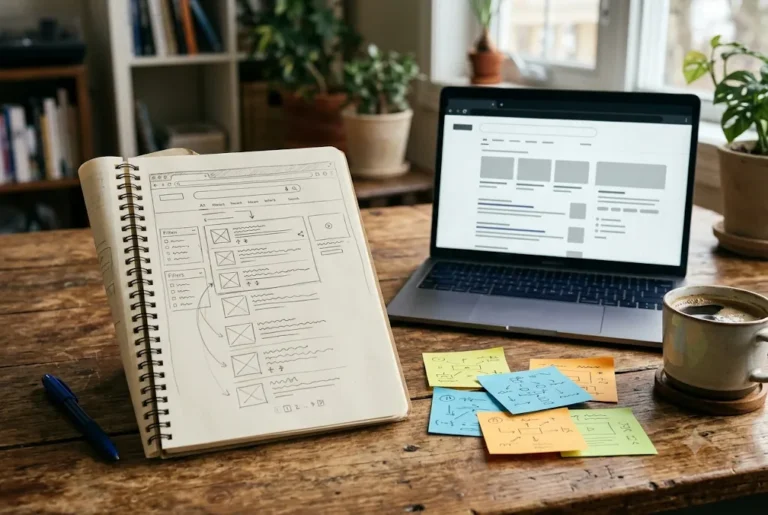
An SEO guide for small businesses has to answer one practical question: how do you get found on Google by people who are ready to call, message or buy from you? This guide walks through the whole job in plain language, from keywords and page edits to speed, local search, links, tracking, cost and a 90-day plan. It is written for Indian business owners, so it covers Google Business Profile, WhatsApp enquiries, Hindi and regional searches and mobile-first visitors. Nobody can promise rankings, but you can do the right work in the right order. Our guide to AI Generated Content and Google’s Spam Policies covers this in more depth.
Key takeaways
- SEO means making your website and business easy for Google to understand and easy for customers to trust. Results depend on competition, website quality, budget and time.
- Start with search intent: pick keywords that match what a buyer actually types, not just big numbers.
- Fix the basics first: a fast mobile site, clear page titles, one page per service and working contact options.
- For local businesses, a complete Google Business Profile often matters as much as the website.
- Measure with free tools, Google Search Console and Google Analytics, and review monthly.
- SEO is slow. Plan for months, not days, and be wary of anyone who guarantees a position.
What SEO is and how Google finds your business
SEO stands for search engine optimisation. In simple terms, it is the work of helping search engines understand what your business offers and decide that your pages deserve to be shown when someone searches. Google does this in three stages. It crawls the web by following links, it indexes pages by storing what they are about, and it ranks them by deciding which ones best answer a particular search. Most delays around the complete seo guide come from unclear feedback, so keep comments specific and in one place.
Ranking depends on hundreds of signals, but for a small business they boil down to three questions. Is the page relevant to the search? Is the website technically healthy and fast on a phone? Does the business look trustworthy, through reviews, mentions and links from other sites? Your job is to answer yes to all three, page by page. With the complete seo guide, consistency matters more than volume: a few well-made pieces beat many rushed ones.
It also helps to know the kinds of searches people make. An informational search such as "how to choose a laptop" wants advice. A commercial search such as "best CA firm in Dehradun" is comparing options. A transactional search such as "buy running shoes online" is close to paying. Small businesses usually win first on commercial and local searches, because they are specific and the buyer is nearer to a decision.
If you want to see how Google views your own site, our Google Search Console guide for beginners shows where to start.
SEO versus paid ads: where each fits
Paid search (SEM) means you pay Google every time someone clicks your ad. SEO means you invest time and money to earn free clicks that keep arriving after the work is done. Neither is better in every case. Ads switch on quickly and are easy to stop, which suits a new offer or a seasonal rush. SEO builds slowly but can lower your cost per enquiry over time, because you are not paying for each visit.
Many small businesses use both: ads to get early enquiries while the SEO foundation matures. Ad spend is paid directly to Google, separate from any agency fee. Our comparison of SEO vs SEM and which to choose helps you decide, and if you want ads set up, see our Google Ads and SEM services. Ask how the complete seo guide will be tested or checked before it is called finished.
Want this done for you? Ragnar Studio's handles SEO Services. See how it works or get a free quote.
Keyword research: finding what your customers type
Keywords are the words and phrases people type or speak into Google. Good keyword research is less about software and more about thinking like your customer. A dentist in Pune might assume people search "dental care", while real patients type "root canal cost in Pune" or "dentist near me open Sunday". Share your references for the complete seo guide, including things you like and things you want to avoid.
Follow this simple method:
- List your services and products in the words customers use, including Hindi or regional terms written in English letters, such as "shaadi card printing".
- Add places and qualifiers: city, area, "near me", "price", "online", "for small business".
- Check Google itself. Type your phrase and note the autocomplete suggestions, the "People also ask" box and the related searches at the bottom.
- Look at the results. If the first page is full of large directories and national brands, the phrase is hard. If you see small local businesses, you have a chance.
- Group by intent and give each group its own page. One page should target one main topic.
Free tools such as Google Keyword Planner and Google Search Console show volume and the queries you already appear for. Treat volume numbers as rough guides. A phrase with 50 searches a month that brings serious buyers beats one with 5,000 curious visitors.
On-page SEO: a checklist for every important page
On-page SEO is what you control directly on each page. Work through this list for your home page, each service page and each product or category page. A deeper version lives in our on-page SEO checklist.
- Title tag: include the main phrase near the start, keep it under about 60 characters and make it read like a promise, not a list of keywords.
- Meta description: roughly 140 to 155 characters that tell the searcher why to click. It does not directly rank you, but it affects clicks.
- One H1: a clear heading that says what the page is about. Use H2 headings for sections.
- Opening paragraph: state the answer or offer in the first 100 words and use the main phrase naturally.
- Helpful content: cover what a buyer needs to know, such as what is included, who it suits, how you work, how to contact you and common questions.
- Clean URLs: short and readable, like /interior-design-in-jaipur/.
- Images: compressed, named sensibly and given short descriptive alt text. Never stuff alt text with keywords.
- Internal links: link to related pages with descriptive anchor text so visitors and Google can move through the site.
- Clear next step: a visible call button, WhatsApp link or enquiry form.
The golden rule is to write for the reader first. If a sentence sounds odd when read aloud because a keyword is crammed in, rewrite it.
Technical SEO: speed, mobile and crawlability
Technical SEO makes sure Google can reach your pages and that visitors do not leave in frustration. Most small business sites need only a handful of fixes. See the full list in our technical SEO checklist.
- Mobile first. Most Indian searchers use phones, often on mobile data. Text should be readable without zooming, buttons easy to tap and nothing should jump around while loading.
- Speed. Compress images, avoid heavy sliders and autoplay videos, and choose decent hosting. Slow pages lose visitors before they read a word.
- HTTPS. Your site should load securely with a valid SSL certificate.
- Sitemap and robots file. A sitemap lists the pages you want indexed. Make sure your robots settings are not accidentally blocking the whole site, a common mistake after a redesign.
- No broken pages. Fix links that lead to error pages and set proper redirects when you change a URL.
- One version of the site. Make sure the www and non-www addresses, and http and https, all point to a single version.
- Structured data. Adding the right schema markup for your business, products or FAQs helps Google understand the page. Only mark up content that is actually visible.
If your site feels slow, our tips on website speed optimisation go into detail. If you are unsure where problems lie, a website SEO audit gives you a prioritised list. A clear brief is the single best investment you can make before starting with the complete seo guide.
Content that earns trust and rankings
Content is how you cover many searches without writing one giant page. Aim for a simple structure: a page for every main service, a page for every city or area you serve if you genuinely work there, and blog articles that answer the questions buyers ask before they enquire.
Good small business content has a few habits. It answers real questions in specific terms, such as how long a job takes, what affects the price and what to prepare. It uses your own experience, photos of real work and honest limits. It is updated when things change, and it avoids copying competitors or spinning text with AI tools without checking facts. Google's systems favour pages that show real experience and are helpful to people.
For Indian audiences, think about language. If your customers search in Hindi, Marathi, Tamil or another language, create pages in that language rather than machine-translating the English ones. Mixed Hinglish searches are also common, so include natural phrasing where it fits. If writing is not your strength, our guide to website content that converts shows how to structure pages, and professional content writing can fill the gaps.
Local SEO and your Google Business Profile
If customers visit you or you serve a specific city, local SEO is often the fastest win. When someone searches "salon near me" or "electrician in Indore", Google shows a map with three businesses, then normal results. Getting into that map pack depends mainly on relevance, distance and prominence. Revisit the complete seo guide every few months, because needs, tools and expectations change over time.
Do these things in order:
- Claim and complete your Google Business Profile. Choose accurate categories, add services, hours, photos, a local phone number and your website. Our walkthrough on how to set up Google Business Profile covers each step, and our Google Business Profile optimisation service can do it for you.
- Keep your name, address and phone number consistent everywhere online: website, directories, social pages.
- Ask real customers for reviews by sharing your review link on WhatsApp after a job. Reply to every review politely. Never buy reviews.
- Post updates and photos regularly so the profile looks alive.
- Create location pages only for areas you truly serve, each with unique details.
More detail is in local SEO for Indian small businesses, and our local SEO services page explains how we can help.
SEO for online stores
Online stores face extra challenges: many similar product pages, filters that create duplicate URLs, and thin descriptions copied from suppliers. Focus on a few things. Write unique product descriptions that mention size, material, use and delivery details. Give each category page an introduction and a clear heading. Use clear product images with alt text, show reviews and price in standard formats, and keep out-of-stock pages helpful rather than deleting them blindly. A short checklist for the complete seo guide keeps everyone aligned and makes later changes easier to discuss.
Shopify and WooCommerce both handle basics well, but you still need to check page titles, collection pages, speed and structured data. If you sell in India, add shipping times, return rules, GST invoice information and cash on delivery or UPI options clearly, since these affect both trust and conversions. Our ecommerce SEO services cover these store-specific tasks, and the topic is expanded in our guide to ecommerce SEO for Indian online stores.
Links and mentions: building authority honestly
Links from other reputable websites act like recommendations. A few relevant links beat hundreds of poor ones, and paid link schemes can lead to penalties. Practical, safe ways for small businesses to earn links include listings in genuine local and industry directories, being featured by suppliers, associations or chambers of commerce, sponsoring a local event, sharing useful data or guides that others cite, and getting quoted by local news or blogs.
Avoid buying packages of thousands of links, link exchanges at scale and comment spam. Start small and stay relevant. Our link building basics for Indian small businesses lists realistic first steps you can take without a large budget.
Measuring results with free tools
You cannot improve what you do not track. Set up two free tools. Google Search Console shows which searches bring impressions and clicks, which pages are indexed and which errors Google finds. Google Analytics shows how visitors behave after they arrive. Start small with the complete seo guide, learn from the first results and then expand what works.
Track numbers that connect to business, not just traffic: phone calls, WhatsApp clicks, form submissions, direction requests from your Business Profile and, for stores, orders. Add simple tracking, like a unique phone number or a tagged WhatsApp link, so you know which channel sent the enquiry. Review once a month. Look for pages gaining impressions but few clicks (improve the title), pages with clicks but no enquiries (improve the offer or layout) and queries you did not expect (new content ideas).
Cost, timeline and whether to hire help
SEO has no single price. Costs depend on how competitive your market is, how many pages need work, whether the site needs technical repair, how much content is required and whether you also need local or store-specific work. Indian agency retainers and freelancer rates vary widely, so any figure you hear online is a rough guide, not a quote. Our article on SEO cost in India breaks down what drives pricing.
Timeline matters as much as cost. Early changes may be noticed in weeks, but competitive terms usually need months. We explain the factors in how long SEO takes.
You can do a lot yourself: set up your Business Profile, fix titles, write helpful pages and ask for reviews. Hire help when technical issues are beyond you, when you lack time or when competition is strong. A good partner explains the plan, shows a written scope, reports on enquiries and never guarantees rankings. Ragnar Studio's offers SEO services for small businesses with a custom quote after we understand your site, city and goals. If the complete seo guide involves several people, nominate one person to collect feedback and make the final call.
Common SEO mistakes to avoid
- Targeting only broad terms like "digital marketing" instead of specific, local, intent-rich phrases.
- Keyword stuffing or repeating the same phrase unnaturally. It reads badly and can hurt.
- Ignoring mobile design and speed.
- One page for every service, which dilutes focus. Give each major service its own page.
- Copied or thin content, including supplier descriptions used by many sellers.
- Forgetting redirects after a redesign, which throws away existing rankings. Read our website redesign checklist before changing a live site.
- Blocking Google by leaving a "discourage search engines" setting on after launch.
- Expecting instant results and changing strategy every few weeks.
A 90-day SEO plan you can follow
Use this as a starting point and adjust it to your size and market.
- Days 1 to 10, set up. Install Search Console and Analytics, confirm the site is indexed, claim your Business Profile and list your top services and cities.
- Days 11 to 30, fix and optimise. Repair speed and mobile issues, rewrite titles, descriptions and headings on your top pages and add a clear WhatsApp or call button.
- Days 31 to 60, create. Publish or improve one service page per week and two helpful articles that answer buyer questions. Add real photos and FAQs.
- Days 61 to 90, build trust. Collect reviews, earn a few relevant listings or mentions and review your Search Console data to see what is working.
- Day 90 and onward. Keep a monthly rhythm: review the numbers, update old pages and add new content.
Summary: your SEO guide for small businesses on one page
SEO rewards patience and clarity. Understand what customers search, build helpful pages for each service, keep the site fast and mobile friendly, complete your Google Business Profile, earn trust through reviews and relevant links, and measure what matters. Use the SEO checklist for small business websites to keep yourself on track. Results depend on competition, budget and time, and no honest provider can promise a fixed ranking. If you want a hand, Ragnar Studio's can plan and execute the work step by step. Keep a written record of what was agreed about the complete seo guide, including dates and who approves what.
Frequently asked questions
What is the first step in SEO for a small business?
Start by making sure your website is indexed by Google and that you have free Search Console access. Then list the services you sell and the exact phrases customers use, and claim your Google Business Profile. These three steps give you a base to build on.
How long does SEO take to work for small businesses?
It depends on competition, your starting point and the work done. Some local improvements show within weeks, while competitive phrases often take several months. Anyone who promises a fixed date or first position should be treated with caution.
Do I need a website to do SEO in India?
A website gives you the most control, but a well-built Google Business Profile can bring calls and visits on its own. Most businesses need both, because the website explains services in depth and the profile captures local searches. When you look at the complete seo guide, compare scope and clarity first and price second.
Is SEO better than Google Ads for a small business?
Neither is always better. Ads give quick traffic and stop when you stop paying, while SEO takes longer and keeps building. Many businesses use ads for early enquiries and SEO for steady growth. Ad spend is paid directly to Google. Setting a sensible budget for the complete seo guide early makes every later choice simpler.
How much should a small business spend on SEO?
There is no standard amount. Cost depends on competition, number of pages, technical repair and content needs. Ask for a written scope and compare what is included, not just the monthly fee. Our SEO cost article explains the drivers in detail.
Can I do SEO myself without an agency?
Yes, many basics are doable by an owner: Business Profile setup, page titles, helpful content and review requests. Hire help for technical fixes, competitive markets or when you lack time. Learning the basics first also helps you judge any agency.
Does Hindi or regional language content help SEO?
Yes, if your customers search in those languages. Write natural pages in that language instead of machine translating, and include common Hinglish phrases where they fit. This can reduce competition compared with English-only terms.
What should I follow first in an SEO guide for small businesses?
Follow the order in this SEO guide for small businesses: fix indexing and mobile speed, optimise key service pages, complete your Business Profile, add helpful content, collect reviews and measure monthly. Doing the basics well beats chasing advanced tricks. Deadlines around the complete seo guide work best when they include buffer time for feedback and changes.
Want a clear plan instead of guesswork? Ragnar Studio's can review your site and build an SEO plan through our SEO services for small businesses, with a custom quote after we understand your goals.
Free quote
Tell us about your website
Fill this short form and send it on WhatsApp. We reply with questions or a quote. Nothing is charged on the website.
- Takes about two minutes
- Goes straight to Ragnar Studio's on WhatsApp
- Prefer email? Write to info@ragnarstudio.com
Ready to start The Complete SEO Guide for Small Businesses in India?
Tell us what you need. We reply on WhatsApp with questions, next steps and a quote.